Categories
Applying the identity Buses Devon General Hants & Dorset Western National

Cream on the side: the transition to the new identity

Rapid roll-out of the new identity led to some odd compromises

Nearly a year passed between the introduction of the NBC corporate identity and the launch of Norman Wilson’s fully-fledged Corporate Identity Manual. Wilson had been clear-minded on the importance of consistency from the start. However NBC chairman Fred Wood saw advantages in getting staff and passengers to identify with the new uniformity of presentation and service to the public, as a way of beginning to change the culture and perception of the NBC and its subsidiaries.
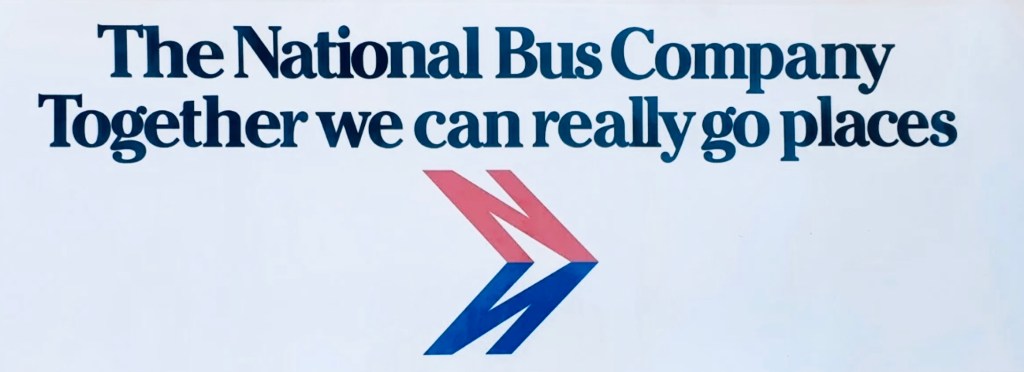
NBC’s objective was to use its new corporate identify to achieve rapid and radical change in public perceptions of bus and coach travel.

Across publicity and advertising, and things like timetable leaflets, company names began to appear in Wilson’s new bespoke NBC typeface – with the words “Associated with the National Bus Company” added as a strapline. This needed to be matched by the main projection of NBC’s identity into the high streets and housing estates of England and Wales – the buses themselves.

The solution was to start applying the strikingly modern NBC logo and fleetnames ahead of making other changes. This could be done faster than waiting for a full repaint into the new colours of poppy red or leaf green with white, or even the halfway house of painting white bands over cream and black lining and using the existing base livery, for example the darker Tilling red or green. But a strange consequence was that the modern fleetnames were for a time applied in a more traditional cream colour, as part of the existing colour schemes, rather than the clean, modern white of the new corporate identity.

Hants & Dorset Lodekka KMT 608, fleet number 401, in Salisbury late in 1972. Tilling-red and cream with cream NBC fleetnames, and National Bus corporate identity advertising. The blue dot over the yellow fleet number shows that it is a Salisbury depot bus.

Hants & Dorset were quick to get into the spirit of the new corporate identity – if not its precise application. The picture below shows an attempt to match the bus to the new NBC identity shown on the bus’s advertising panel. The differences between advertising illustration and application are pretty obvious now, but probably weren’t to the casual observer, so the early brand application probably did the trick. By 1972, former Wilts & Dorset Lodekka KMR608, had been absorbed into the Hants & Dorset fleet as their no 401. It retained the Tilling red of Wilts & Dorset, which was extended over the black lining, and gained cream-coloured NBC-style fleetnames and double-N arrow to match its cream band.
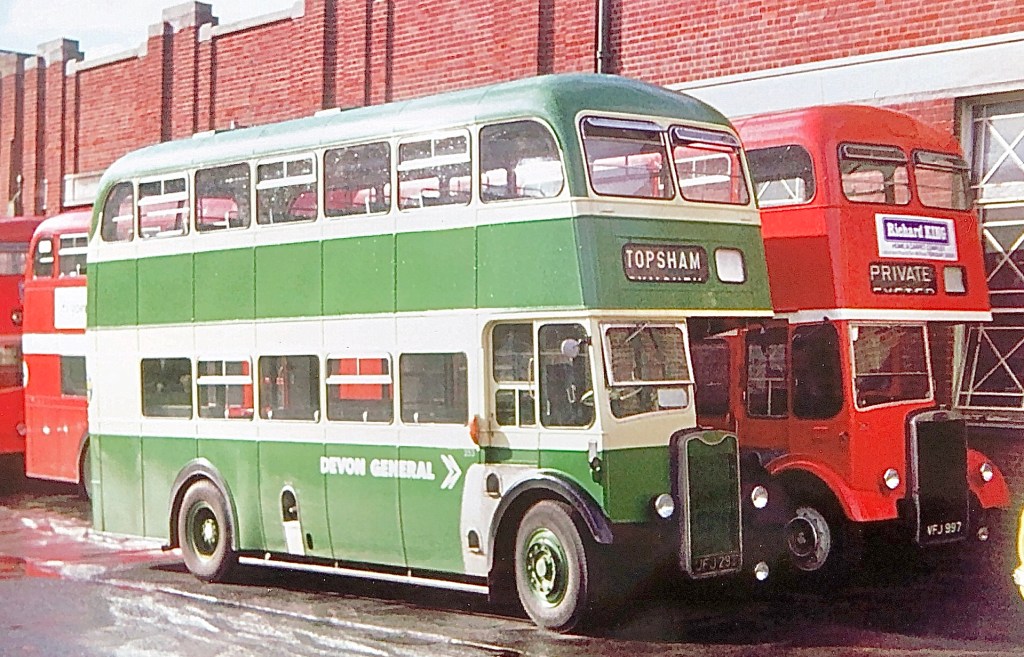
A Devon General Guy Arab in Exeter Corporation green and magnolia, with NBC fleetnames in white, at Exeter bus depot in 1973.

Devon General’s main livery was red, in spite of being a subsidiary of green-liveried Western National. In 1970 it took over the buses of Exeter Corporation Transport, and once the corporate identity was initiated in 1972 this Guy Arab retained its Exeter ‘green and magnolia’ livery but gained while NBC-style Devon General fleetnames. It contrasts with Exeter vehicles in the background which Devon General had already repainted into NBC poppy red and white.

Something has gone wrong with the rebranding of Western National’s no. 1923 seen here at Weymouth in 1973. 1923 retains Tilling green livery, and though the black lining has been painted over and cream replaced with white, the NBC-style fleetnames and logo have been applied in cream.

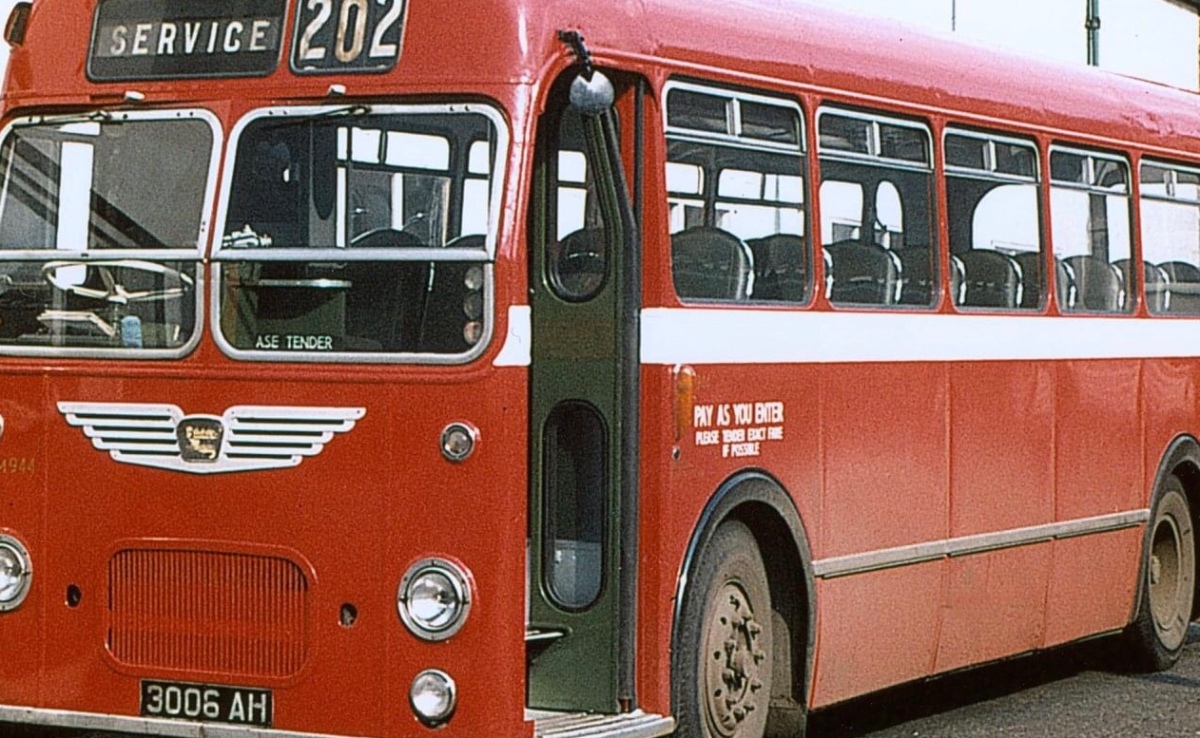
Western National’s 1923, Lodekka UOD 477, at Weymouth in 1973.

Categories
Applying the identity Buses Eastern Counties

New for old

Interim colours and a half-way house in 1972

For most of the lifetime of the corporate identity, its application was strictly policed by NBC from its London headquarters in New Street Square. The first Manual was developed during the course of 1972 and issued to local subsidiary companies in stages as Norman Wilson oversaw the development and initial roll-our, starting with the National ‘white coach’ network, followed by a new identity for local buses, and later a new standard livery for regional express ‘semi-coach’ or ‘dual purpose’ vehicles.

There were some differences in the rules in the very early days, as well as various interpretations and mishaps, mostly stamped out quickly by HQ.  These included overuse of white bands where local staff felt the main blocks of unrelieved green or red gave larger buses a drab look, and attempts to replicate the cream and black lining from the traditional liveries with additional white bands, particularly on double-deck vehicles. 

A more common occurrence – initially sanctioned by NBC HQ – was an ‘interim livery’ to help to accelerate the roll-out of the new identity. Buses not due for a full repaint into the new corporate colours would simply have white or cream ‘thick’ bands painted over the original cream and black waistbands, with new NBC-typeface fleetnames and logos applied over the existing darker shades of red and green. Remarkably – given the later strict policing of the new corporate colours – cream NBC symbols and fleetnames were issued by NBC and used by many operators, to match the cream waistbands of the traditional liveries.

This was stamped out later in 1972. As Norman Wilson said in the later Manual, “It is of vital importance to the overall maintenance of the National Bus Company image that colour schemes and usages are strictly followed. The use of red, per se, is not the same thing as the use of the correct red.”

Though initially approved, this half-way solution undermined the all-important consistency of the new Corporate Identity, so was frowned upon by HQ, and had largely disappeared within a year.

Eastern Counties’ Bristol MW LM944 at Ipswich in 1972 illustrates the ‘half-way’ rebrand. Its cream and black lining has been replaced with an NBC white stripe, but it retains its darker Tilling red. Photo: Michael Woolnough, Eastern Transport Collection, provided by Sydney Eade.

Sydney Eade was a conductor working at Lowestoft for Eastern Counties in 1972 when the new livery started to be rolled out, and remembers the early mixed livery attempts, as illustrated by Bristol MW LM944 at Ipswich, “just after ‘conversion’ to NBC livery by painting put the cream band and black lining in ‘fat white’. The old fleetname has vanished but the new double ‘N’ white one has not yet been employed.”

Eastern Counties Bristol RLs at Lowestoft in 1972. On the right, RL522 and RL520 were the last to be delivered from the town’s Eastern Coach Works in Tilling Red livery. RL734 is also in Tilling Red, but has faded, and has had the white band treatment. Photo: Sydney Eade.

Sydney, an active preservationist with the Eastern Transport Collection Society since its early days, remembers the arrival of the first repainted NBC red Bristol Lodekka to arrive at Lowestoft – possibly LFS86 or 87. “I got to work on it on the first day of service”, he says. “I thought it was amazingly smart and gave the bus a new life, and I had no feelings of regret that Tilling red was on the way out at the time.”

Thanks to Sydney Eade for permission to use the photos of Eastern Counties vehicles on this page.