Categories
Applying the identity Buses Hebble Lincolnshire Northern Tyneside Yorkshire Traction

NBC’s true colours? Modern shades of red and green

The Corporate Identity adopted bold, modern shades of the industry’s traditional green and red for local services. We crunch the numbers on the adoption of the new colours across the country.
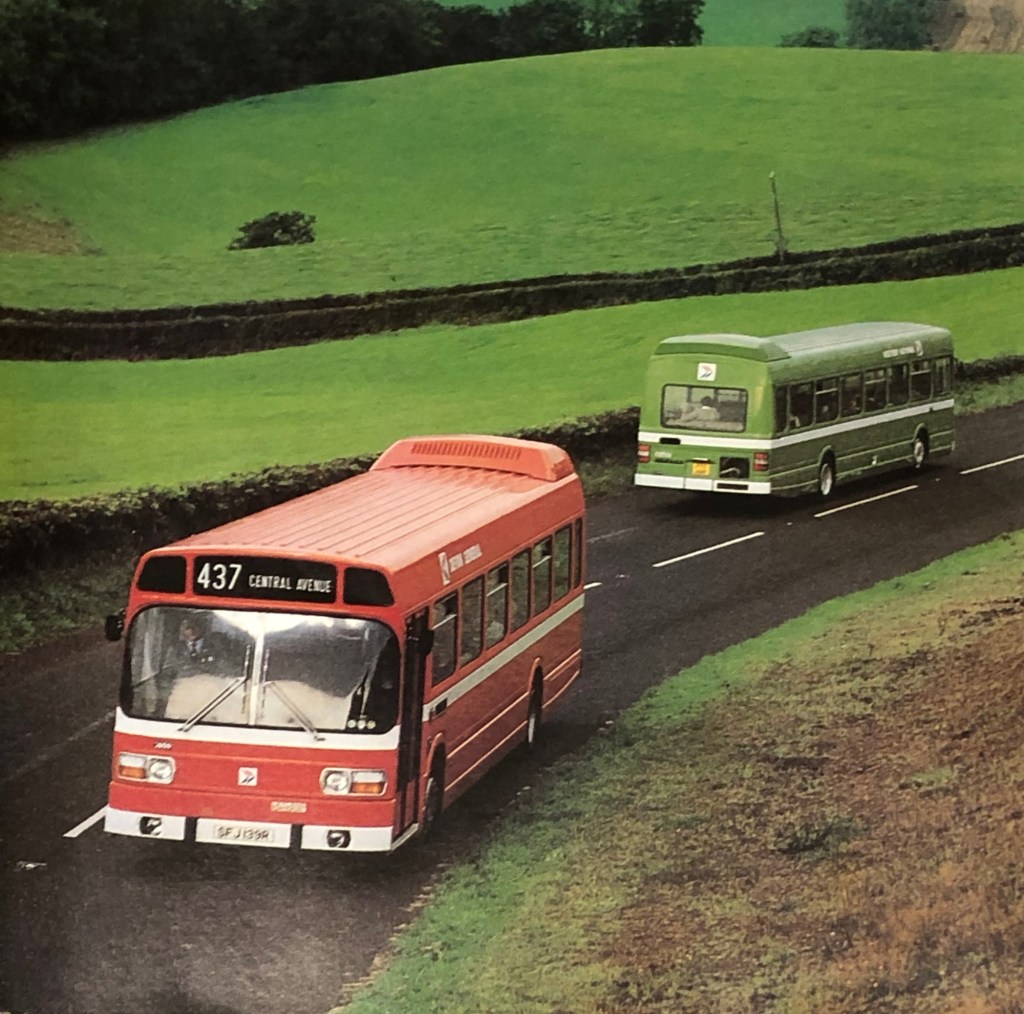
From NBC’s 1976 advert ‘The go between’, two of the company’s Leyland Nationals cross paths somewhere in the west country: a green vehicle from Western National, and a red Devon General bus. (Photo: Tony Whitehead, for NBC).

In 1972, the National Bus Company adopted Norman Wilson’s recommendation to standardise on two colours for its buses. Wilson had argued for a thorough reworking of NBC’s corporate identity, adopting the three key elements of a distinctive symbol (his ‘N’-and-shadow-arrow), distinctive typography (his bespoke National lettering), and disciplined use of bold corporate colours.

Red, blue and white had been chosen for the initial National branding early in 1972, reflected in that year’s first edition of the Corporate Identity Manual, developing the concept of the ‘white coach’ uniform national network. The approach to the identity for local buses, announced in July 1972, stretched Wilson’s disciplined colour scheme, adding green to the corporate palette.
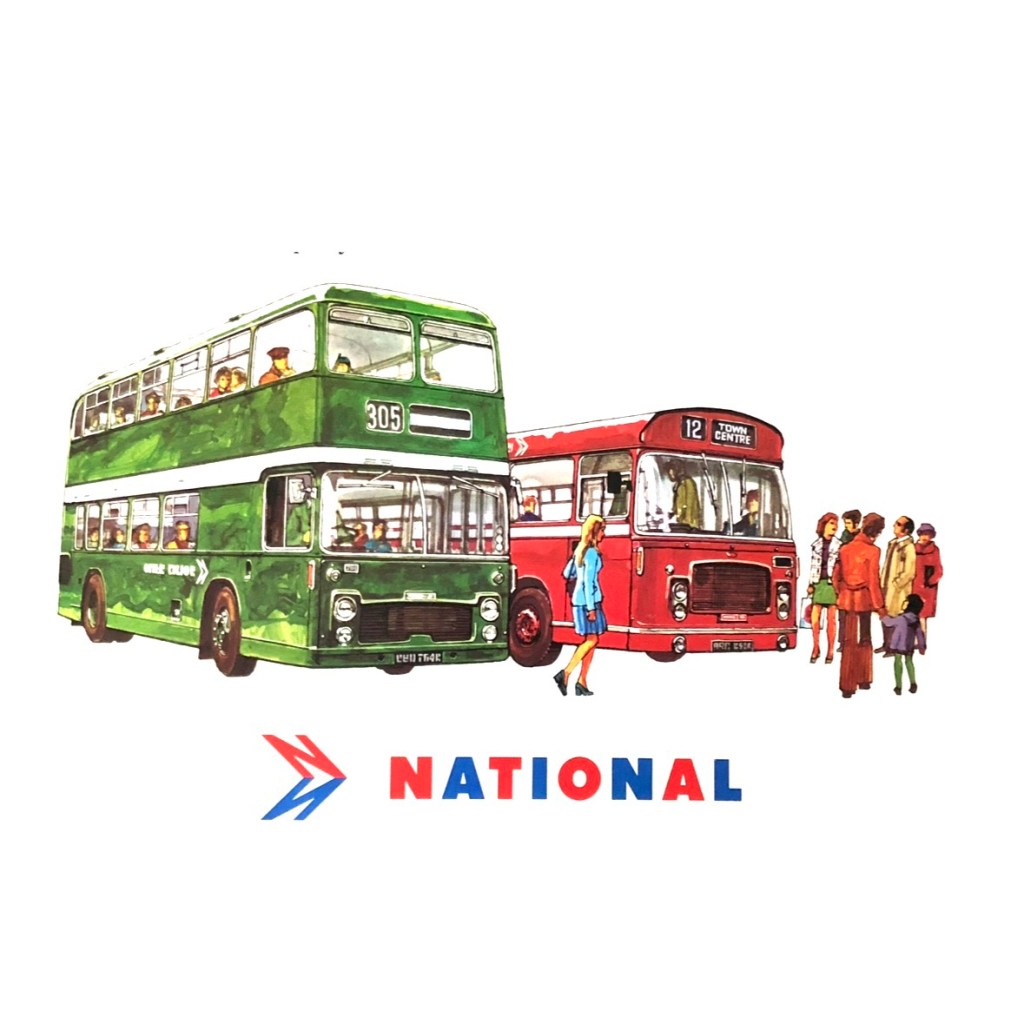
Though the vibrant shades of red and green chosen were intended to signal a move towards a modern industry and away from the from the ‘drab’ darker colours previously used by local bus companies, green was retained as a nod to the companies’ traditions, intended to retain an element of pride and goodwill from staff and passengers alike. Adopting a single bus colour was thought to be too disruptive, and possibly confusing for passengers in parts of the country where NBC subsidiaries overlapped and provided services on different routes.
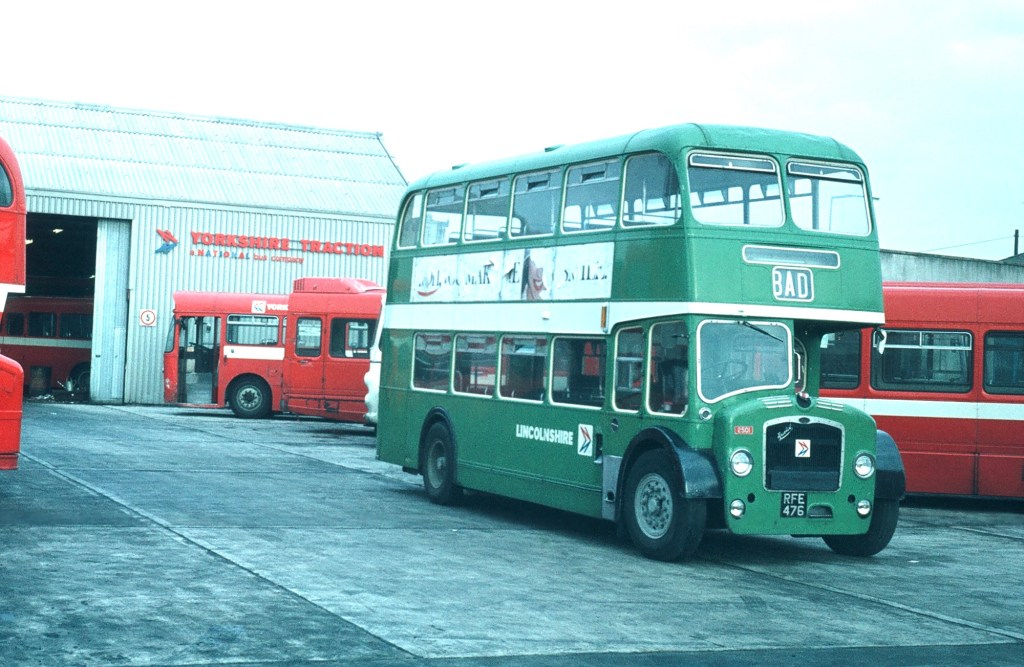
Visiting Lincolnshire Road Car green Lodekka 2501 in a sea of red at Yorkshire Traction’s Doncaster depot, in around 1979.

Blue, meanwhile, was used by relatively few local companies, so though it would have been a better fit with the National identity, it was argued that adopting it nationally would have required more upheaval. In practice, of course, the introduction of the new identity required all vehicles to be repainted in the new colours anyway, so whether switching to blue would have been more challenging logistically is a moot point.

Norman Wilson appears to have disapproved of the compromise to include green in the corporate identity so fiercely that the colour green does not appear on a single vehicle illustration in his otherwise comprehensive Corporate Identity Manual, even illustrating liveries for ‘green’ companies in red. (The reprint of the Manual will add in some green illustrations as extra pages.)

At Eastern National’s Chelmsford works, Fred Brewster applies the new corporate identity lettering and symbol transfers to a Leyland National in 1973. Read more in the blog on corporate disobedience. Picture: Tony Whitehead/NBC.

What proportions of NBC’s fleets went leaf green, and how many buses ended up in red? How many local fleets adopted other colours?

To answer this question we accessed the initial tenders for fleet name transfers in Wilson’s new National lettering, filed away in The Bus Archive. The tender calls for printed transfers for around 18,000 vehicles, consisting of 5” high fleet names and monochrome versions of the NBC symbol. The NBC symbol was ordered in a single version, as the monochrome version could be rotated to point left or right. The later 1976 colour panel bearing the NBC symbol had to be printed with separate versions facing left or right – each having the red ‘N’ on the top, and its shadow in blue below.

A tender document for the bulk purchase of NBC symbol and fleetname transfers, in preparation for the roll-out of the corporate identity, showing the numbers needed – roughly double the number of vehicles in each operating company’s fleet. The letter was sent to suppliers by A O Timms in NBC HQ’s purchasing department at New Street Square in London and is dated 25 July 1972, just a week after the new identity for local buses was announced. Source: The Bus Archive.

Initially NBC offered both symbol and fleetnames in the corporate identity standard white as well as a variant in cream to allow the new graphics to be applied – incongruously – to buses still in their traditional colours with lining in cream, without having to wait for a repaint. In practice few companies took up the cream option, preferring to adopt the new standard straight away.

Only a few local operating companies took up the offer of cream-coloured fleet names in Norman Wilson’s National lettering and NBC symbols. The thinking was that the identity could be rolled out faster by matching the new graphic design to the traditional liveries lined out in cream, rather than waiting for buses to be repainted. In practice the mix of Bauhaus-inspired graphic design with traditional liveries usually looked quite odd. In 1972, Alder Valley Loline III number 503 is undergoing its own transition from the green livery of Aldershot and District, into the new combined Alder Valley fleet, and will eventually end up in poppy red. Much later, in preservation, it will turn back into its traditional Aldershot and District colours, which it carries today. Picture: Richard Price collection.

These early tender documents from July 1972 indicate the numbers of fleet name transfers needed by each company, asking suppliers to quote for the transfers in either cream or white, but do not show which local bus companies have asked for the cream version, nor how many. The tender invitation also refers to the symbol and fleet name lettering “with black outline”. Originally Norman Wilson and colleagues thought that a thin black ‘keyline’ would be needed to allow a crisp edge to the graphics, and this was reflected in the Corporate Identity Manual of June 1972. However testing proved that the method of applying transfers to painted vehicles gave a sharp enough look, so in September a simplifying modification sheet was added in the Manual, stating that ‘transfers of name and symbol [will be] in one colour only. Contrary to page 8 the “thin black retaining key line” is deleted.’

This sheet showing fleet names prepared in Norman Wilson’s National lettering was circulated with the tender invitation letter to transfer suppliers. It includes Hebble, which by 1972 had lost most of its bus routes to adjacent NBC operating companies, the company becoming solely a coach operator until its absorption into National Travel (North East) in 1973. The Hebble fleet name was not used once the corporate identity was adopted, except as a coach brand, which in turn was dropped in 1973. Source: The Bus Archive.

The numbers shown in the chart don’t precisely match the fleet lists of the time, as there was some over-ordering of transfers (the breakdown for Northern’s subsidiaries uses the PSV Circle’s fleet listings for 1972). By halving the order numbers, we have an approximate number of local buses (stage and dual-purpose) in use in each local fleet in mid-1972, as the corporate identity was being rolled out.

These show that, on adoption of the corporate identity in 1972:

⁃ of 42 local bus companies, 24 adopted red as standard, and 14 green, while 3 retained one of the several shades of blue. Northern and its subsidiaries operated a mix of red and yellow fleets from the early 1970s, though on adoption of the new identity red was used except in Sunderland District which retained its ‘midnight blue’.

⁃ around 55% of buses were adopted the new poppy red, a bit less than 40% leaf green. Less than 3% retained blue, while large parts of Northern General’s fleet of around 500 vehicles, together with a smaller number of buses from Northern subsidiaries Tyneside and Tynemouth, later turned out in NBC yellow, complementing the cadmium yellow adopted by Tyne and Wear Passenger Transport Executive for its own buses.
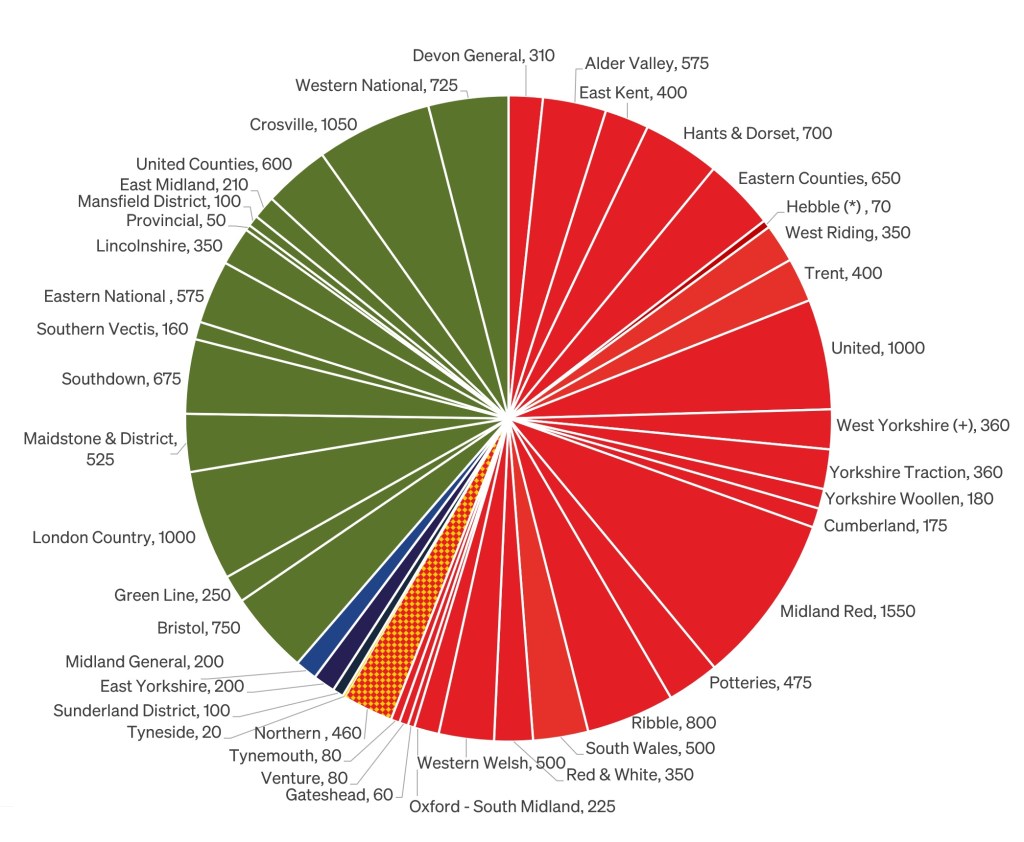
The colours of NBC’s fleet of around 18,000 local buses on adoption of the corporate identity. Calculations of local bus allocations, based on fleet name orders from the July 1972 invitation to tender document.

Incidentally, the labels ‘poppy red’ and ‘leaf green’ – widely used by designers, enthusiasts, preservationists and staff across the industry – do not appear anywhere in the company’s documents, including the Manuals! The new colours are referred to simply as National red and green.
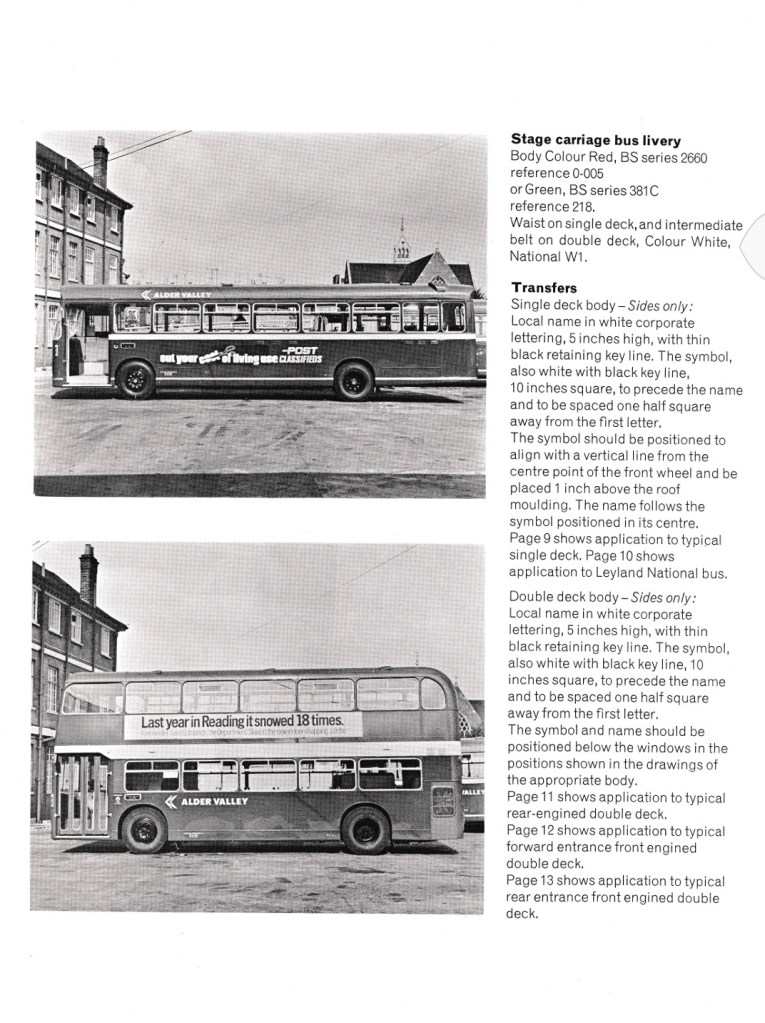
Instructions from the 1972 edition of the Corporate Identity Manual explain the specification and position of the fleetname and new NBC symbol. Source: NBC Manual Project.
An outpost of NBC green in the north: on adopting the corporate identity, Northern General subsidiary Tyneside replaced its traditional dark shade of green with red, and then yellow as it operated within the Tyne and Wear PTE area. But briefly, some of its vehicles, still in green, had the NBC lettering and symbol applied. A rare picture of Tyneside Daimler Fleetline 93L en route to Newcastle in 1972. Photo: Michael Mccalla.

Read more about how the modernist-inspired design of the NBC identity was shaped by Norman Wilson’s design influences, combining his three key elements: bold, uniform colours, his distinctive typeface, and a striking monochrome version of his NBC symbol, wordlessly conveying the nature of the business, all drawn together in a grid-based layout which brought a sense of uniformity and modernity across disparate companies and an enormous variety of vehicle types.

If you have recollections of the roll-out of the new livery, how it was managed, or remember your initial reaction to it, please let us know.  We’d be happy to include these in a future blog, and perhaps in the Manual book itself. Get in touch using the form on this page, or the contact page here: https://nationalbusmanual.com/contact/

Categories
Applying the identity Gateshead Northern Sunderland District Tynemouth Tyneside Venture

Poppy yellow

Northern General went beyond the usual red and green, stretching NBC’s corporate identity in the streets of the north east with a vibrant mix of colours.

The NBC years are remembered for their uniformity, with leaf green and poppy red dominating bus fleets across almost all of England and Wales.  They are remembered with a mix of fondness for bold modernity thrust upon cities, towns and villages still shaking off the decay of the post-war years, and resentment from those with strong attachments to the variety of semi-independent bus companies with their roots in the local community. 

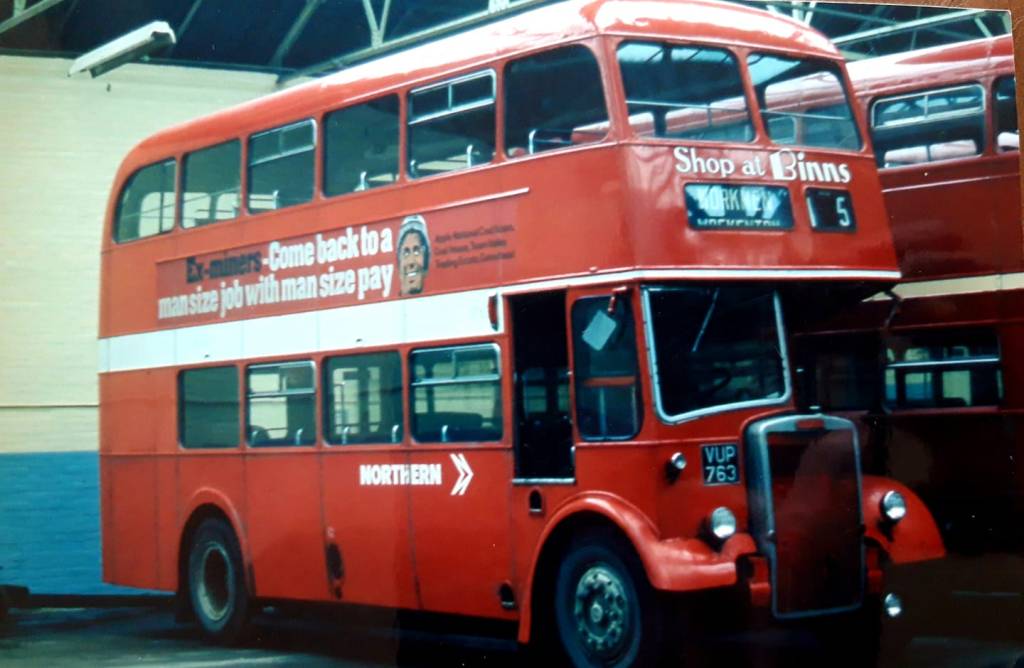
Northern Routemaster 2087 with hastily added NBC style fleetnames while still in BET Red, seen here at Hartlepool bus station. (Photo: Michael Mccalla)

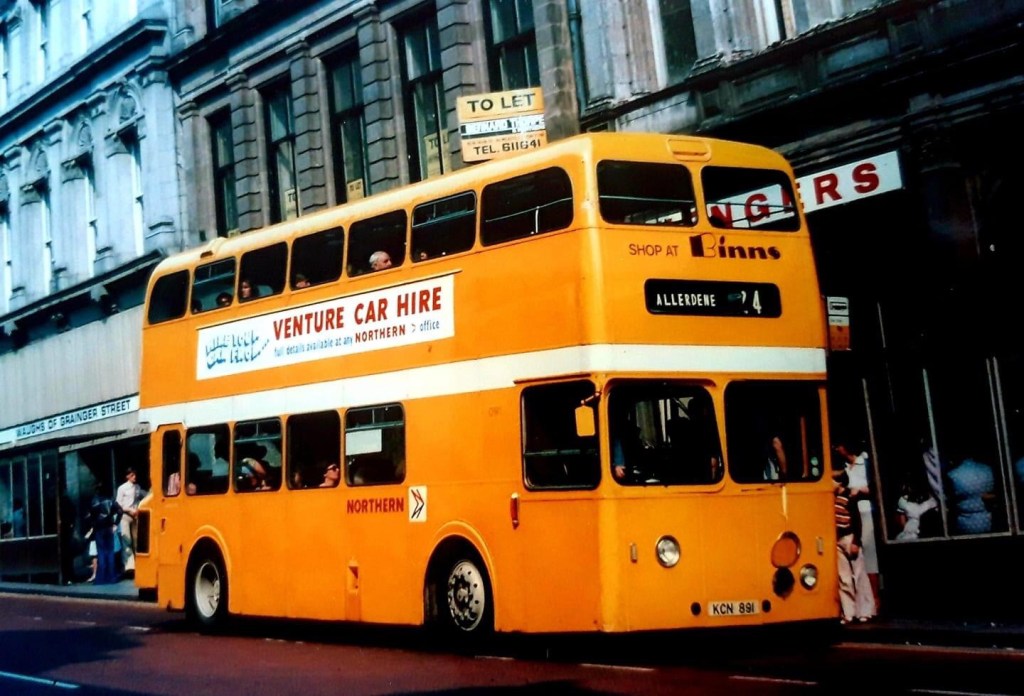
While leaf green and poppy red dominated, there were a few parts of the NBC empire which were able to go their own way. Perhaps the most striking of these was Northern. There, managers connived with the new Passenger Transport Executive to strike out in an independent approach. The Tyne and Wear PTE had taken over municipal bus services across much of the north east of England – notably in Newcastle, Sunderland and Gateshead – and its own modernisation applied a livery of bright ‘cadmium yellow’ and cream, derived from the colours which had previously adorned Newcastle Corporation’s trams, trolleys and buses. Northern aimed to break away from the uniform red bus livery it had applied across its buses, suggesting initially to adopt the same Tyne and Wear PTE colours on its routes mainly within the PTE area.

As custodians of the corporate identity, NBC headquarters initially objected strongly. But at the same time NBC was trying to shape a new relationship with the PTEs as powerful arbiters – and major funders – of urban transport, including issuing subsidies and service contracts to NBC itself.  So a compromise was struck.  Northern could apply a yellow livery to the fleet for its urban routes, but not the PTE’s yellow.  It had to be an NBC yellow livery, using the yellow specified in the Corporate Identity Manual, generally reserved for auxiliary and training vehicles.  In all other respects the livery was to follow the manual – from the shape of the white bands to the position of the company identifiers, though these (and initially the NBC logo) were uniquely displayed in red, particularly striking on a yellow background.  

Northern Routemaster 3071, recently painted into NBC yellow, accompanied by a Leyland Atlantean in poppy red, outside its home depot of Park Lane, Sunderland, early 1970s. (Michael Mccalla)

To liven things up even more, Sunderland and District Omnibus – which had been a subsidiary of Northern General since 1931– had retained a separate identity with a blue livery, initially continuing to use its existing non-NBC dark blue. During a transition, Sunderland buses ran in their blue colours with a white band, with National-style company identifiers and double arrow applied.

Sunderland’s Roe-bodied Leyland Atlantean 3174, in Sunderland and District’s blue and white livery, with NBC symbol and rebranded to Northern.

Sunderland District Park Royal bodied Atlantean 171M is seen leaving Park Lane bus station, Sunderland, in its dark blue livery, painted to NBC corporate identity configuration. Photo: Michael Mccalla

So during the early 1970s, Northern General’s buses were divided into red, yellow and blue fleets; and branded with separate NBC fleetnames for the metropolitan areas of Sunderland, Gateshead, Tyneside and Tynemouth. Venture Transport, based on the Consett area and taken over by Northern in the 1970s, also initially retained its own identity in NBC corporate style, adopting poppy red. Northern’s other subsidiary – Wakefields – was phased out as a separate company in 1969, prior to the NBC corporate identity period.

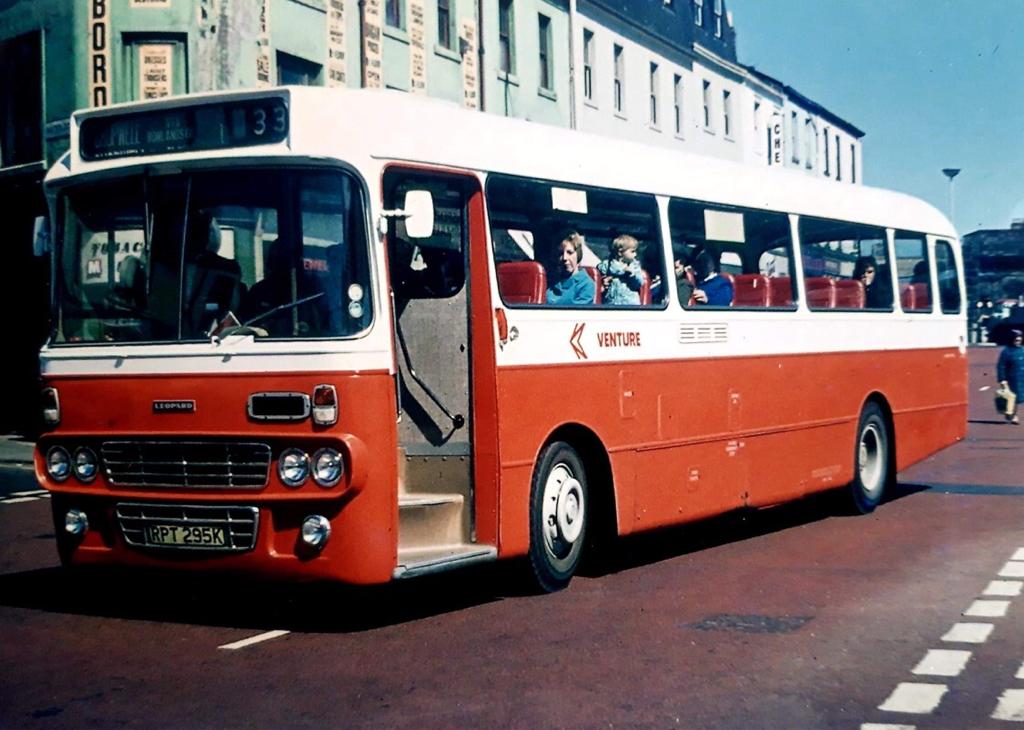
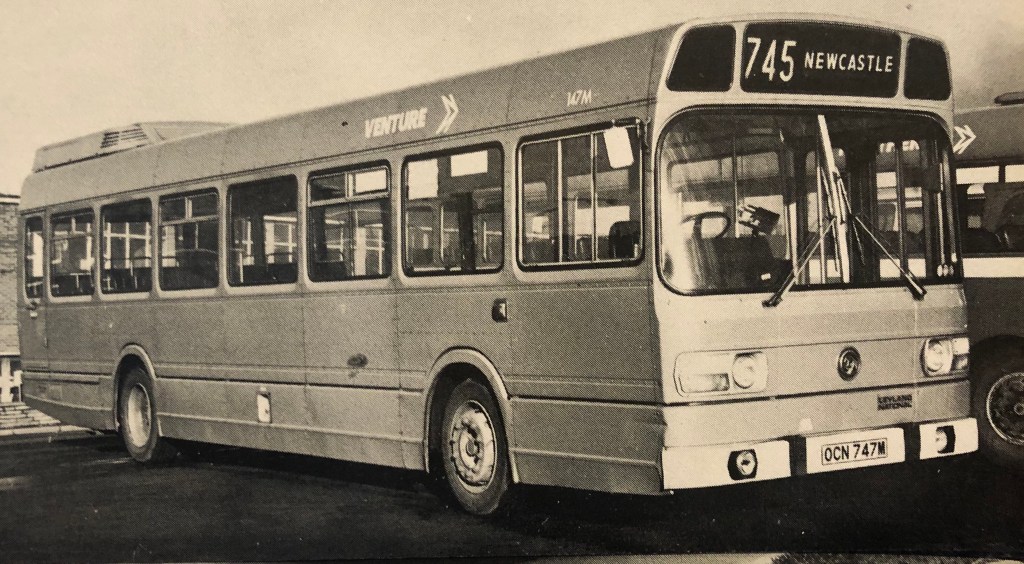
Venture’s Alexander-bodied Leyland Leopard no 295 in the standard NBC dual-purpose livery, departing Newcastle’s Marlborough Crescent bus station. Photo: Michael Mccalla.
Tynemouth adopted NBC red as its main livery colour, but like the rest of Northern General, used yellow for services mainly within the urban PTE area. This is Tynemouth 2863 at North Shields on a service to Tynemouth, a former United Lodekka FLF. Photo: Michael Mccalla

All this made life much more interesting for depot staff than their NBC counterparts elsewhere, and nowhere more so than in the paintshop.  Michael Mccalla was a coachpainter at Northern’s Bensham works between the 1970s and 1990s. His job was applying the company’s multiple liveries, while sticking to the rules set out in the NBC Manual.  Fortunately for all of us, he also kept a photographic record of a lot of his work.

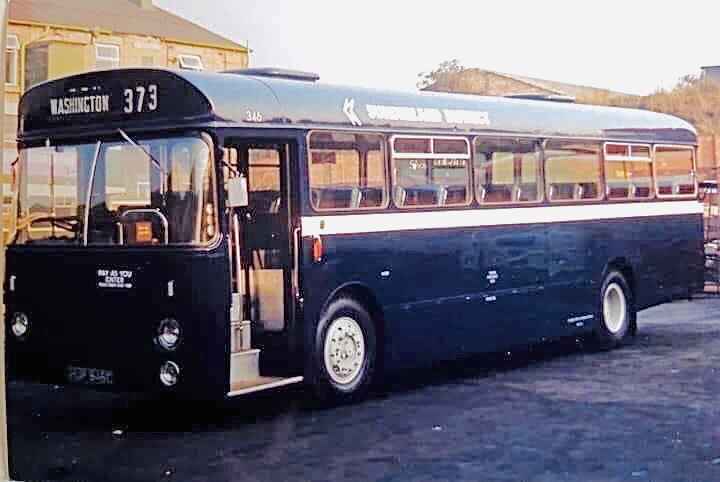
“The first vehicle I worked on and helped paint as an apprentice coachpainter at Northern Central Works, Bensham, was Sunderland District’s Leyland Leopard 346”, recalls Michael, “in an NBC-style livery but using Sunderland’s old ‘Midnight Blue’, a much darker shade than NBC’s own approved blue”.  

Michael’s first vehicle: Sunderland District’s 36’ Leyland Leopard 346, freshly painted by Michael Mccalla and colleagues at Northern’s Bensham works, in 1972. Photo: Michael Mccalla.

“It looked great at the time.” says Michael, “The problems came later. The blue was a nightmare to paint over when Poppy Red and Yellow were introduced.” Along with the other Northern subsidiary companies, Sunderland and District lost its identity in January 1975, requiring the whole dark-blue fleet to be gradually repainted, though many were rebranded ‘Northern’ and stayed in blue for many years. There were also transfers to other NBC operating companies: Eastern Counties (see photo) was one of the companies faced with the tricky challenge of painting a standard livery over hard-to-cover midnight blue.

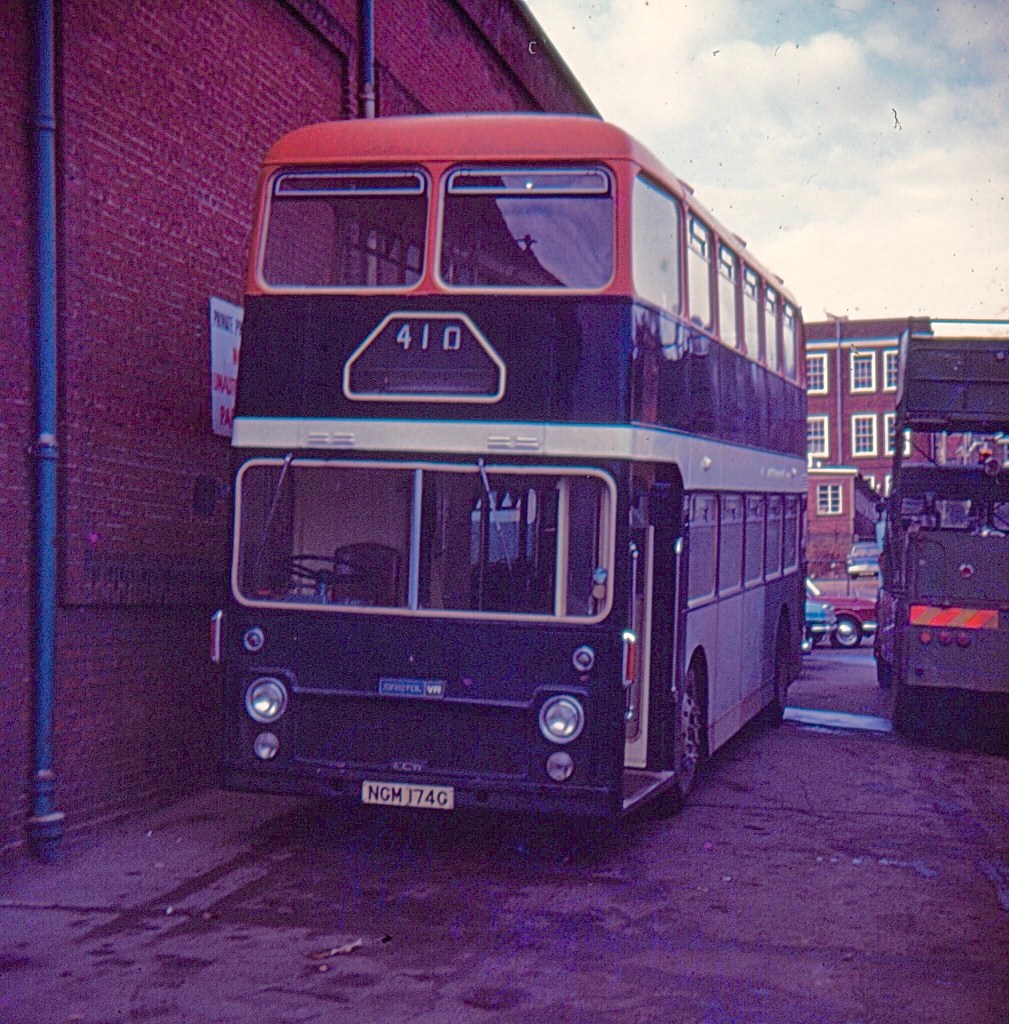
Eastern Counties bore the brunt of the challenging dark-blue-to-poppy-red repaint on the transfer of Bristol VR series 1 NGM 174G, which started life at Central SMT and was one of the vehicles involved in the complicated swaps of VRs and Lodekkas between the NBC and SBG in 1974. The bus arrived in Norwich as Eastern Counties VR319 – but not before a brief stay on Tyneside where Northern’s Michael Mccalla started to paint it into the NBC version of Sunderland’s midnight blue livery. Here it is awaiting its next repaint into poppy red at Eastern Counties’ Main Works, Cremorne Lane, Norwich. (Photo: Tim Moore’s collection)

But when they were reliveried into Northern’s standard Poppy red, or urban yellow, they were very striking on the streets of the north east.  Michael was responsible for a number of the repaints, as well as painting Northern’s red Leyland Nationals into urban-area NBC yellow. “I must admit when newly painted these did look decent” Michael remembers. 

Northern MK1 National 4609 in NBC Yellow livery complete with white relief. Photo: Michael Mccalla.
Recently re-branded from Gateshead, and with the post-1976 NBC symbol in a white panel, Northern’s Roe-bodied Leyland Atlantean no 0191 is seen on a cross-Tyne service in Newcastle. (Photo: Michael Mccalla)

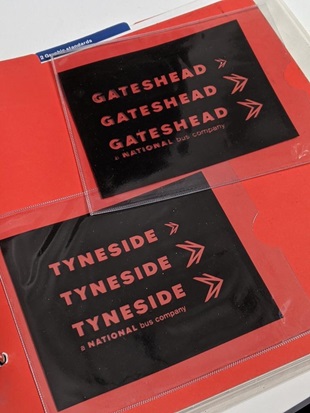
Uniquely, the yellow livery featured company identifiers in dark red. As for all operating companies, company identifiers were supplied from NBC headquarters, using the bespoke National typeface, as photographic negatives, which were enlarged and reproduced locally. These were issued with the Corporate Identity Manual, with pages including wallets to hold the negatives, along with ‘sign-out/sign-in’ sheets to keep track of them. The use of pre-prepared negatives avoided any risk of the wrong typeface being used, and avoided inconsistent letter spacing. Northern General’s copies were unusual in coming with negatives for the many different fleetnames in use – Tyneside, Tynemouth, Sunderland & District, Gateshead, Venture, and Northern itself.

From the Corporate Identity Manual itself: each operating company’s copy of the Manual included wallets for photographic negatives of the ‘National symbol’ (the double-N arrow) and the relevant local ‘company identifiers’ (the fleetnames). Photo: Matt Harrison.

Like its buses, Northern General’s coaches came in a variety of liveries, with PTE, urban and non-urban dual-purpose, and full-coach National variants. There were even some variants that shouldn’t really have happened – such as the Bristol RE in a unique PTE dual-purpose livery. Michael Mccalla recalls: “I managed to get away with painting Bristol RE 4882 into Tyne and Wear PTE livery when it should have been all-over yellow. But this is what happens when the foreman is on holiday and you’re put in charge”.

For an era when public transport on the roads came in green, red or white in most of England and Wales, Northern’s flexible take on the NBC corporate identity added some colour and variety to the streets of the north east.

Special thanks to Northern coachpainter Michael Mccalla for his help with this article, and for providing the fascinating pictures of Northern’s colourful vehicles – many of them his own handiwork.

Former Venture Alexander bodied AEC Y-Type 266 seen straight out the paintshop in NBC yellow at the High Spen depot. 266 has Northern company identifiers in red, but with the later style of red-and-blue NBC logo on a white panel, introduced from 1976.  Photo: Michael Mccalla. 
At Heworth bus station, ECW-bodied Bristol RE no 4882, shortly after Michael Mccalla’s rogue repaint into a dual-purpose version of TWPTE’s cadmium yellow. Photo (and livery): Michael Mccalla.
One of only two white National coaches carrying the Sunderland name, this is Plaxton-bodied Bristol RE no 122L, in Sunderland. Photo: Michael Mccalla.
Leyland PD2 no 1763 was the only one of its type to be painted in NBC poppy red, seen here at Chester le Street depot in the early 1970. Photo: Michael Mccalla
Venture Transport’s Leyland National 167M, later Northern’s 4501, in NBC poppy red without white bands, in around 1972.  Photo: Geoff Coxon.
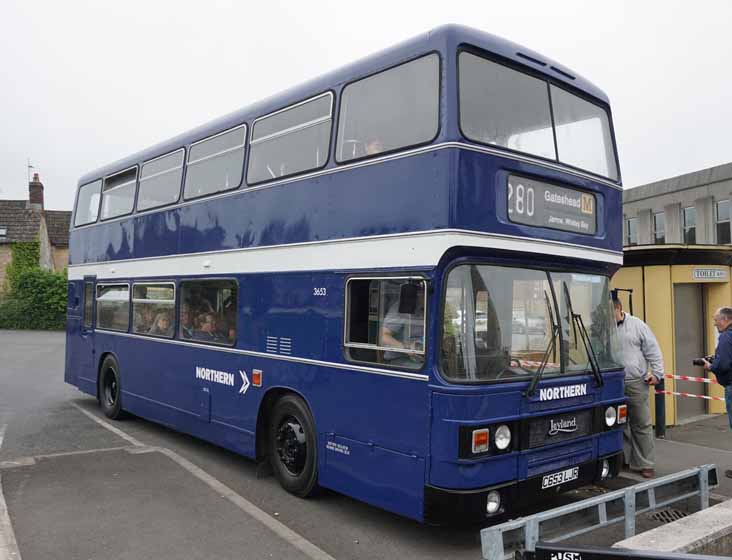
The NBC-blue version of Northern’s distinctive liveries has featured in preservation. Leyland Olympian 3653, seen here at an enthusiasts’ event, appears in a lighter shade than the ‘midnight blue’ used on Sunderland and Northern vehicles in the 1970s, though closer to the ‘authorised’ colour used by other NBC subsidiaries. Many former Sunderland buses were rebranded ‘Northern’ in the mid-1970s when Northern General’s sub-brands were phased out. As a relatively new bus, new to Northern in 1985, 3653 would not have worn this precise livery, with the pre-1976 monochrome double-arrow, in service – but wears it well in preservation nonetheless. Photo: Martin Isles, showbus.com