Categories
Buses Cambus East Yorkshire Gloucester Jones of Aberbeeg Midland General Red & White Royal Blue Sunderland District Yorkshire Woollen

The story of the blues

Red, white and blue was at the core of NBC’s modern corporate identity. So why was the company strangely reluctant to use blue across its huge fleet of buses and coaches?
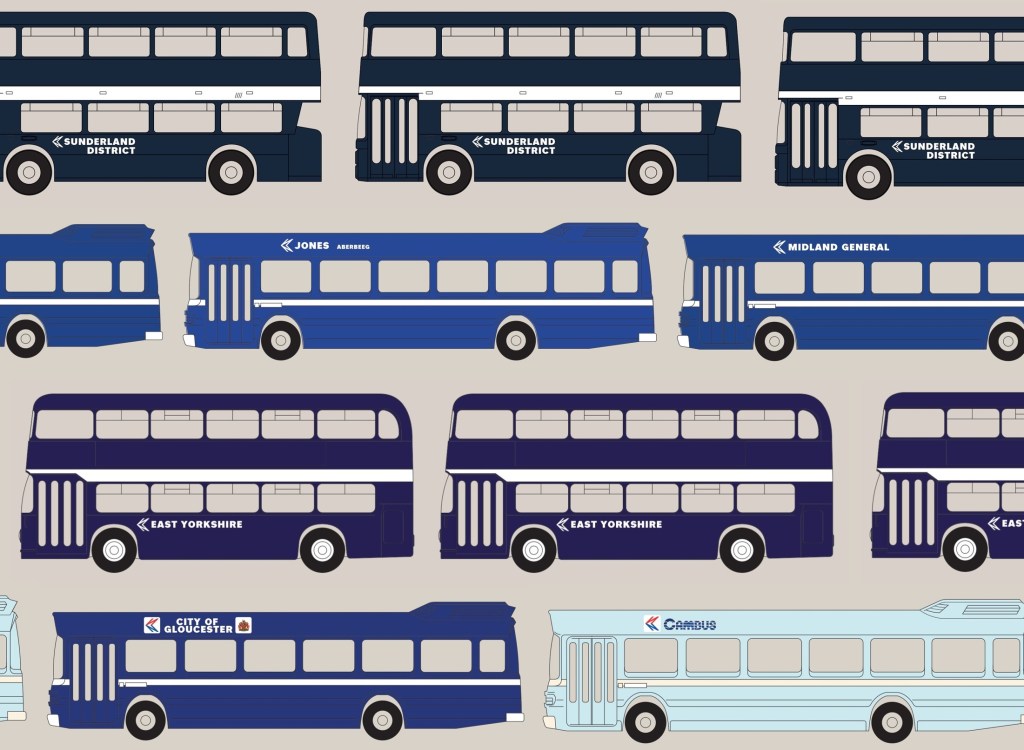
Many shades of blue. After battles over the use of ‘traditional’ green, blue was not adopted as a standard NBC bus colour as Norman Wilson and Freddie Wood had intended. Individual companies were give special dispensation to continue to use blue. But the lack of a standard approach meant a plethora of different shades emerged. Only Jones of Aberbeeg adopted the NBC standard blue, as intended. Picture: illustrations in the style of the Corporate Identity Manual; Martyn Cummins/Richard Price; typeface digitised by Nick Job.

In June 1972, the planning of NBC’s ambitious corporate identity programme was proceeding apace. Norman Wilson’s modern identity, inspired by Swiss design thinking and the Bauhaus, combined three elements – a striking geometric symbol; distinctive modern lettering; and the disciplined use of a narrow palette of bold colours to create a strikingly modern impression of the business and the industry. Red, white and blue were chosen as the ‘company colours’ for NBC as a whole and for the National express coach network. Red and blue lettering adorned the company’s trademark ‘white coach’, inspired by the extensive Greyhound network of silver coaches in the United States, and designed to be just as iconic.

Red, white and blue seemed a logical choice for a company branding itself as ‘National’. And it worked well, capturing the public’s attention through advertising campaigns to introduce the network, and through the sheer physical presence of the white coaches on the roads.

Blue is used extensively in the NBC corporate identity, including in the symbol and the logotype.

Developing a way to extend this approach to local bus services – making extensive striking use of the corporate colours – ought to have been easy. Indeed it seems that the original concept for the corporate identity was that buses would appear in one of two standard NBC colours: red, or blue. But there was a catch. Wilson and corporate identity champion, NBC chair Freddie Wood, ran into a groundswell of opposition from the NBC local subsidiaries’ General Managers who, fearful of a negative reaction from traditionalist staff, favoured incorporating another colour, green, into the corporate identity, reflecting strong industry traditions and the extensive use of green in local company liveries across England and Wales.

Wilson and Wood were modernisers, but they were pragmatists too. They relented in the interests of retaining the goodwill of the 50-or-so General Managers of NBC’s subsidiaries, an important part of the leadership on whom Wood depended to drive change through the business.

So the preponderance of green and red liveries led to an anomaly. In the interests of simple modern image, Wilson’s scheme restricted local buses to one of two colours. With the intervention of General Managers, green was added as an option, and companies chose red of green to reflect their previous traditions, using standardised shades specified in the Corporate Identity Manual.

There was a price to pay: the adoption of green effectively displaced the proposed use of blue as a standard colour, even though it had been championed by Wood and Wilson. Indeed the NBC identity was already based on red, white and blue, and a handful of existing bus fleets used blue as their livery colour. Wilson stuck to his guns on reducing the number of colour options to two, even though his design judgement was that green was at odds with the modern image of the identity.

So the experiments with design and early vehicle trials at Alder Valley and Crosville used red and green liveries. Norman Wilson did not like having to compromise on matters of design, particularly when he was convinced of the right answer. It is notable though that Wilson did not include a single green vehicle among the illustrations for the Manual: all of the vehicles in the Corporate Identity Manual are illustrated in red. (We will put this right when the Manual is reproduced by adding a few new pages.)

In the NBC collection at the Bus Archives, there are references to the work of the Corporate Identity Committee, attended by Norman Wilson. In the spring and summer of 1972, the committee had its hands full with the roll-out of and publicity for the ‘white coach’ network. They were also turning to consider Wilson’s proposals – within parameters already agreed by Wood – for applying the new bus liveries in green and red. The biggest challenge, as the operating companies’ General Managers saw it – was to address the logistics of getting this done quickly and consistently across 40-50 independently-minded subsidiaries. Faced with practical challenges such as how to paint over existing colours to get a consistent effect, how to apply the identity to existing colour schemes, and how to remove existing decoration and adornments, there was much lobbying from across the business for local exceptions and compromise. With Wood’s backing, and his characteristic bluntness, Wilson was having none of this, and saw little need to compromise on his designs and their rigorous application.

But reports from a meeting of the committee in July 1972 point to ongoing dithering on the question of blue buses.

Tony Whitehead, NBC HQ’s corporate communications manager, remembers that among the HQ Corporate Identity team, “the traditional blues were seen as being a bit dull – dark and old-fashioned”. But the advocates of blue were not easily silenced, particularly as they saw that the principle of blue as a corporate colour had already been established.
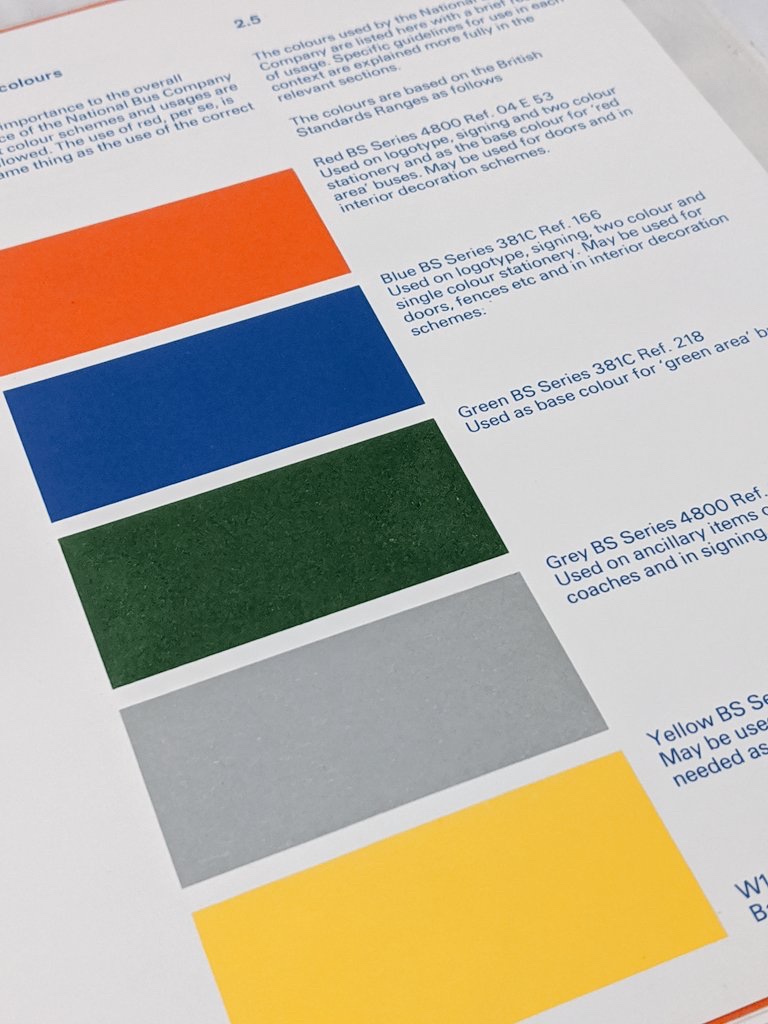
From the 1976 ringbound version of the Corporate IdentityManual, page 2.5 specifies the six standard NBC colours – only two of which, red and green, are intended for use on buses.

This led to an uncharacteristic fudge, reflected in a letter from Ron Whitehouse at NBC HQ to General Managers on 19 July 1972, summarising the outcome of the Corporate Identity Committee’s deliberations and subsequent management discussions:

“I write to advise you that, following discussion with regional directors, the Chairman and Chief Executive have decided upon a standard method of applying corporate identity to stage carriage buses together with rationalisation of livery colours…

“There will be three livery colours only (with certain temporary exemptions) being – Red (BS series 2660 ref. 0-005); Green (BS series 381C, ref. 218), White (National W1) for relief (waistbands, symbols and titles). Creams will be discontinued.

“The exemptions for the time being may be ‘blue’ bus fleets, and Regional Directors will be talking with Chief General Managers regarding the future of this colour.”

In its mid-blue livery, Midland General’s Leyland National 415 leaves Langley Mill garage, Derby, in 1974. Old photographs can be deceptive, but Midland General used a slightly darker shade of blue than that specified in the NBC Corporate Identity Manual. Picture: Richard Price Collection.

These changes to local liveries involved a sweeping away tradition to produce a striking visual impact, but it was common for staff and managers of the local companies to regret the changes, particularly where a radical departure from established colours was involved.

We don’t have records of all of the regional discussions, but at a meeting of the Eastern Regional Management Committee on 26 July 1972, Regional Director C D F Rawlinson asked his Chief General Managers “to recommend whether or not the existing blue liveries should be retained at Sunderland District, East Yorkshire and Midland General, and whether there would be any difficulty in changing the livery of Venture (Newcastle) to Standard Red (from yellow).”

Blue in preservation: for a few years after the adoption of the NBC corporate identity, East Yorkshire’s buses retained their traditional deep indigo colour, but applied in the format specified in the Corporate Identity Manual. A number of buses were built with a special roof profile, allowing them to access the town of Beverley through its arched gate, Beverley Bar. NBC gave special dispensation for these vehicles to be differentiated by retaining a roof-level white band. This preserved example, AEC Bridgemaster number 747, is owned by Graham Hobbins, who had the vehicle beautifully restored to the corporate identity version of indigo blue by Ashley and Kirstie Blackman and team at vehicle restoration specialists Revivist. To superb effect, they’ve followed the Corporate Identity Manual in precise detail. Picture: Graham Hobbins.

Following this up in a memo to General Managers J W Lawrence, Chief General Manager for the Midlands, asked “Can we give consideration to the Yorkshire Woollen District and East Midland fleet taking the National Red colour and eventually the Midland General fleet taking the in the National Red which would be the Trent colour. I know there may be difficulties and objections in certain areas to this, but I think we should examine this very closely.” Though it was hardly differentiated in a sea of red companies across the north, we know that Yorkshire Woollen resisted a switch to green. Meanwhile Midland General – although combined with Trent as a single business entity from 1972 under General Manager L Waller, retained its blue identity.

Serious consideration was given to switching Yorkshire Woollen’s company colour (previously maroon) to green, to distinguish the company from its sea of neighbouring red NBC subsidiaries across the north. It didn’t happen, so here we see Fleetline 693 in 1973, recently repainted in the red version of the new identity. Photo and copyright: I T Langhorn.

It’s not clear exactly what discussions occurred elsewhere between Regional Directors and Chief General Managers, but what is clear is that a blue persisted. It was applied in Corporate Identity form in Sunderland District, East Yorkshire, Midland General and at Jones of Aberbeeg. And though a colour code for standard blue was specified in the manual, the lack of clarity on how it related to vehicle liveries meant that no single shade of blue was adopted across NBC’s subsidiaries, with big variations between companies as they continued to use their existing supplies of paint. However, as these companies’ areas did not adjoin one another, these local differences were rarely noticeable in practice.
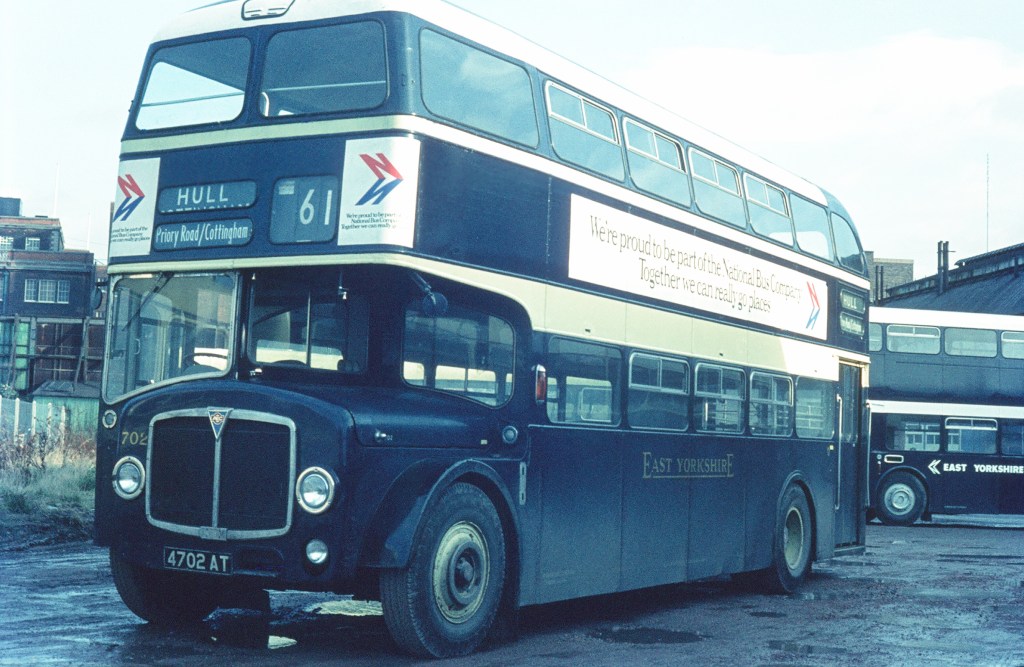
East Yorkshire’s traditional livery was a shade of deep indigo, with bands of primrose, as demonstrated by Bridgeliner 702 – still in the old livery but covered incongruously with NBC posters advertising the new identity. Indigo was carried over into NBC corporate identity form, white replacing the intermediate primrose band, and the others painted over in blue. This is illustrated by the Daimler Fleetline in the background, which has the new NBC version of the indigo livery, with new symbol and fleetnames. Though NBC HQ instructed that white roof bands were not permitted, EYMS received a dispensation under which buses profiled to drive through the narrow Beverley Bar retained a smart white band at roof level. Picture: Richard Price Collection.
Further afield, East Yorkshire’s Leyland Leopard 881 in a Riviera blue version of NBC’s dual-purpose coach livery, negotiates the Waterloo Bridge roundabout in London in 1973. Riviera blue was carried over from the company’s previous coaching colours. When East Yorkshire switched away from both of its shades of blue from October 1973, 881 was later repainted into the red version of the same livery. Picture: Richard Price Collection.

So East Yorkshire retained their previous dark ‘indigo’ blue livery, though their primrose banding was lost in favour of the more modern-looking standard white. Unlike their buses, East Yorkshire’s coaches and semi-coaches had used a different, lighter shade called Riviera blue to relieve the primary colour of ‘buttermilk’ cream. While the company’s coaches went National white, Riviera blue was carried over into East Yorkshire’s version of NBC dual-purpose/semi-coach livery.[1]


Sunderland also continued to apply their own shade of ‘midnight blue’, initially simply adding the NBC symbol and white lettering to the existing livery with a broad white band. Midland General used a mid-shade of blue, slightly darker than the version specified for the NBC symbol and National logotype, and looking particularly dark when applied to an entire vehicle rather than just the lettering.
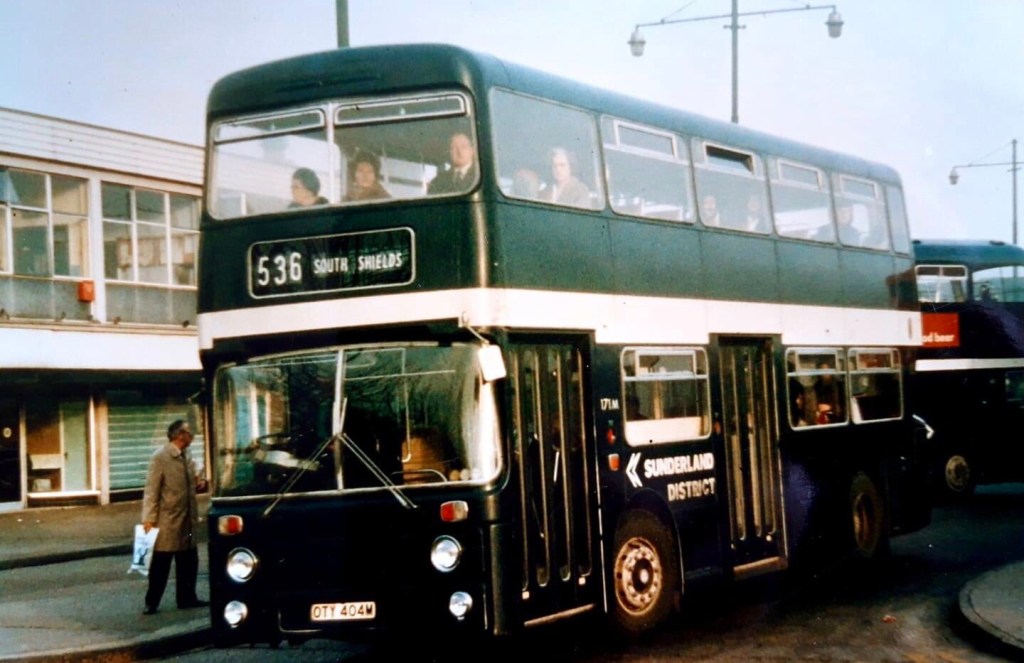
Sunderland District Park Royal bodied Atlantean 171M is seen leaving Park Lane bus station, Sunderland, in its dark blue livery, painted to NBC corporate identity configuration. Photo: Michael Mccalla.

Another letter from Ron Whitehouse of 9 November 1972 put an end to another residual piece of blue livery, when Western National coaching subsidiary Royal Blue lost its blue fleetname underlining and – with the rest of the National White Coach fleet, adopted the new standard larger fleetname in red NBC lettering, without a bar representing the company colour.

Another residual aspect of blue livery was the tiny blue band under the Royal Blue fleetname on the early NBC White Coach livery, reflecting the company colour. This was a little contrived as Royal Blue had no buses, and was a coaching subsidiary of Western National, whose company colour was green. This started to be phased out as early as November 1972, with all fleetnames appearing in larger lettering in NBC red. Royal Blue coach-bodied Bristol REs visit Southend in 1972, 1472 in the new white livery, 2385 in traditional blue. Picture: Richard Price Collection.

In Wales, Jones of Aberbeeg was purchased by NBC in 1969, initially coming under the management of Red and White Services Ltd, but retaining its own identity and working practices as a separate depot unit, managed by a Jones family member. The Jones identity persisted into the 1980s as a result of local fare agreements: Jones typically offered lower fares than Red and White or Western Welsh, and the Traffic Commissioners insisted these fare advantages should be retained after Jones became part of the larger group. The company initially kept its blue-and-ivory livery as part of this arrangement, and this was applied to a number of Red and White buses transferred to Jones. Once the NBC Corporate Identity was introduced by NBC across the country, corporate blue was adopted for Jones of Aberbeeg.  Quite quickly, Wilson’s rules for the layout of colours and bands, NBC fleetnames and symbols were applied. So NBC standard blue joined the range of existing shades already in use.

Jones of Aberbeeg adopted NBC’s standard blue colour, as specified in the Corporate Identity Manual. They give the best idea of how buses across England and Wales could have looked if Wood and Wilson had had their way and adopted blue instead of green as the second standard bus colour. In 1977, Jones’ Leyland Tiger U1264 awaits its next turn of duty at the company’s Warm Turn depot, Aberbeeg. Picture: Richard Price Collection.
Jones of Aberbeeg’s dual-purpose livery looked particularly smart, giving a sense of how dual purpose vehicles would have looked nationally had standard NBC blue been adopted more widely. Bristol RE RD4872 collects passengers for Ebbw Vale and Pontypool at Newport Bus Station in 1978. Picture: Richard Price Collection.

Richard Morgan of the Cardiff Transport Preservation Group (CTPG) in Barry recalls that new Leyland Nationals for Jones were all delivered in poppy red, and had to be repainted in corporate blue before entering service. Tudor Thomas, former Advertising and Promotions Manager for National Welsh and now an active CTPG member, remembers that repainting into blue was done at Red and White’s Bulwark works near Chepstow, “probably one of the country’s best bus works – never a hint of anything slap-dash”. Colour variations emerged depending on how the painting was done, too. Inconsistencies could emerge if blue was applied directly onto a red base to get buses into traffic quickly, while others had blue primer applied before the final coat. For Jones’ new Leyland Nationals, Bulwark Works almost certainly adopted the latter approach.

In Jones’ standard bus livery, with an NBC symbol on its radiator grille, Bristol RE R3671 arrives at Newport Bus Station in 1975. Picture: Richard Price Collection.

Tudor recalls that “when buses eventually had the blue and red version of the ‘flying N’ symbol [from 1976] the blue shade in the symbol was exactly the same as the blue of the bus… this tends to support the theory that the basic blue paint [used for Jones’ buses] was the official blue version: certainly the blue in the symbol was not lighter.”  So in the array of different shades, Jones’ Leyland Nationals from that era probably gave the clearest idea of what a Corporate Identity-compliant blue livery should have looked like. Two were painted in a smart blue version of the dual-purpose livery, for express services along the A48.

NBC HQ tightened the rules through the autumn of 1973, and on 2 January, Ron Whitehouse wrote to all subsidiaries’ General Managers reminding them that “stage carriage busses generally are to be painted either standard red or green, depending on the traditions of the company. There are some exceptions, usually where we are involved in working closely with local authorities and PTEs, but each such exception must have the approval of the Chief Executive, such approval being sought through the Regional Director.”  

The six shades of blue used during the period of NBC’s corporate identity: NBC standard blue used by Jones of Aberbeeg; East Yorkshire’s indigo; Sunderland District’s midnight blue, also used by buses rebranded as Northern; Midland General’s mid-blue; City of Gloucester’s aircraft blue, and Cambus’s Cambridge blue. Picture: NBC Corporate Identity blog.

By this stage blue was already on the way out in the north east. Under pressure from NBC HQ and regional management, East Yorkshire abandoned its traditional dark blue in October 1973 and switched to red. Many of its vehicles went straight from their traditional livery to NBC red, without an intermediate spell in NBC blue. Sunderland District held out a bit longer. Its parent company Northern General adopted red as its main colour, but as we’ve seen it also made extensive use of NBC yellow, reflecting its work in partnership with the Tyne and Wear Passenger Transport Executive. With transitions to both red and yellow going on , Sunderland blue persisted for a while in the new Corporate Identity format, but was gradually phased out along with the separate identities of Northern’s constituent companies in 1975.  It was gone before the 1976 amendments to the Corporate Identity, which saw among other things the monochrome NBC symbol replaced by a red and blue version on a white panel. 

Michael Mccalla recalls several months or repainting blue Sunderland vehicles into NBC yellow – widely used by parent company Northern to reflect the role of the Tyne and Wear Passenger Transport Executive in planning and funding services. As well as repainting the first bus from Sunderland’s midnight blue to yellow (see picture and caption), Michael recalls that spray-painting had to be used to get the right coverall effect, making sure that the strong underlying blue colour did not affect the tone of the yellow.
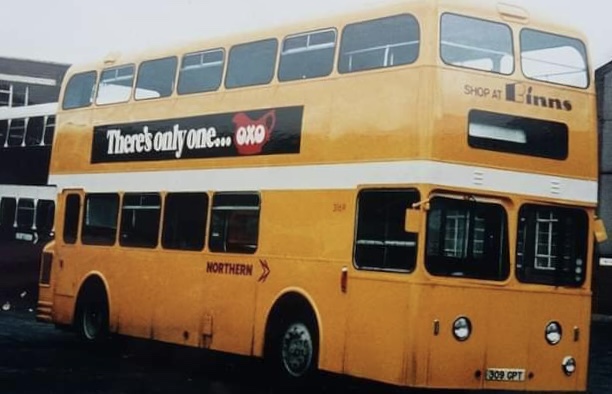
Northern’s Atlantean 309, after repaint from blue to yellow, with a sister vehicle in blue awaiting the same treatment. Michael Mccalla remembers: ‘I had the privilege of painting the very first Sunderland District blue vehicle into NBC yellow in around 1974 or 75. It was Roe-bodied Atlantean number 309. We had to hand-paint it which proved not to be good as it needed three coats of gloss to make it even look yellow – it kept looking greenish. On this basis the decision was taken that all blue vehicles would be spray-painted into yellow – it was faster and gave better coverage – while those going into red were hand-painted.’ Picture: Michael Mccalla

As we have seen, the Midland General blue identity was initially retained, though it was steadily replaced with red through the mid-1970s, the last blue bus leaving service in 1978 when the company was finally fully merged into Trent.[2]

By 1976, East Yorkshire’s blue identity seemed a distant memory. The company’s 830, a Daimler Fleetline like the one shown in blue in the background of the picture above, is shown in full NBC red, with the addition of the colour version of the symbol introduced in 1976. Though this bus has the profile needed to access the Beverley Bar, buses used the new, by the time blue was phased out, the Bar had been bypassed, so a distinguishing white roof band for vehicles which could use it was no longer needed. Picture: Richard Price Collection.

The funding arrangements with local government meant that Jones managed to retain its identity and blue livery a little longer – well into National Welsh ownership, during which the new red-and-blue NBC symbols were applied in 1976 to bring the blue livery into the new instructions from NBC HQ. Jones was eventually subsumed into National Welsh in 1980. [3]

Blue would however make a small revival in Gloucester. A resurgence of local identities following NBC’s Market Analysis Project, which among other things launched new local networks with their own identities. Most subsidiaries applied route or local sub-brands, but the Bristol Omnibus Company chose to launch local semi-independent and separately-branded operations based on towns and cities in its area, and in 1983 split off its services covering Cheltenham, Gloucester, Stroud and Swindon into the separate Cheltenham and Gloucester Omnibus Company in readiness for privatisation.

A 1983 publicity shot of City of Gloucester’s VR 212, still badged as Bristol’s G5120, displaying its new ‘Aviation Blue’ colours at, appropriately, Gloucestershire Airport. Picture: Cheltenham and Gloucester Omnibus Company.

Asserting its newly independent identity, the new company switched from Bristol’s green to adopt NBC red as its standard colour; but within a few months began applying new colours to distinguish its local operations. For its City of Gloucester network, it switched to blue, adopting a rich, dark shade known as ‘Gloucester Aircraft Blue’ in reference to the City’s aviation history.[4] Stroud Valleys meanwhile retained Bristol’s green colour.

In the east, in contrast, a much lighter shade – Cambridge blue – was adopted by Cambus, a new NBC subsidiary formed in 1984 by splitting off parts of Eastern Counties’ western area in preparation for privatisation, under the leadership of MD Paul Merryweather. Initially applying the company’s new logotype, believed to have been designed by Cambridge designer Antonia Galloway and departed from Wilson’s National lettering, with the NBC symbol onto its share of Eastern Counties’ red buses, Cambus rapidly applied its new local livery. Initially this was a straightforward application of a Cambridge light-blue and cream version of the livery configuration specified in the Corporate Identity manual. A two-tone light and dark blue ‘venetian blind’ striped livery was adopted for dual-purpose buses used on long-distance routes. Finally, a two-tone blue and white livery was adopted on privatisation, combing Cambridge blue and Aircraft blue.

Cambus’ Bristol VR number 725 collects passengers at Cambridge’s Drummer Street bus station in the spring of 1987. Picture: Bernard Watkin, courtesy of the Eastern Transport Collection Society.

If you can add to the story of the blues, have any recollections of the abolition or adoption of NBC’s shades of blue, or own one of the restored examples in reservation, please get in touch!
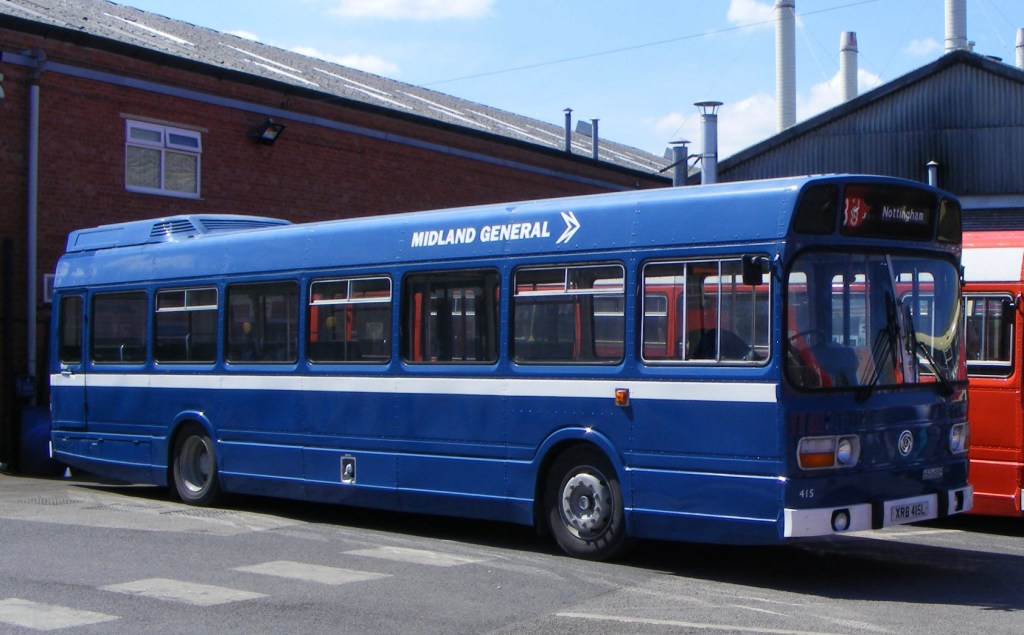
Blue in preservation: Midland General’s Leyland National number 415 has been restored into NBC blue livery using the configuration specified in the Manual. Midland General’s shade of blue was slightly darker than the standard NBC shade, reflecting the company’s previous liveries. It’s seen here at the Midland General centenary event at the company’s former Langley Mill depot in May 2013. Picture: Martin Isles, showbus.com

If you have recollections of the roll-out of the corporate identity, how it was managed, or remember your initial reaction to it, please let us know.  Comments and corrections are also very welcome. We’d be happy to include these in a future blog, and perhaps in the Manual book itself. Get in touch using the form on this page, or the contact page here: https://nationalbusmanual.com/contact/


Sources and references

[1]  Many thanks to Stephen Allcroft and Philip Rushworth for information on East Yorkshire’s coaching colours.

[2] History – Midland General Omnibus Company (weebly.com)

[3] The early NBC era (nwostins.co.uk) – Nigel Frampton’s National Welsh Omnibus Services pages

[4] Rob McCaffery: Gloucestershire 1986, in Transport Illustrated. Transport Illustrated: Gloucestershire 1986 (transport-illustrated.blogspot.com)
Categories
Alder Valley Applying the identity Bristol Crosville Devon General East Kent East Midland Hants & Dorset London Country Northern Potteries / PMT Ribble Southern Vectis Trent Welsh National West Riding Western National Yorkshire Traction

Innovating at the edges: the corporate identity and service vehicles

Local companies adapted the NBC corporate identity to service vehicles, producing some interesting (and occasionally wild) innovations.

Michael Hitchen, author of the leading book on the subject (see links at the end), presents a guest blog on the way NBC’s corporate identity guidelines were adapted (and widely ignored!) for local companies’ service vehicles.

Although the National Bus Company had existed since 1969 it would not be until 1972 that detailed Corporate identity instruction were issued. These included every facet of the organisation activities, including livery instruction on the Service Fleet, a mixed range of vehicles from vans, lorries, recovery vehicles, trainer vehicles and a range of miscellaneous types.

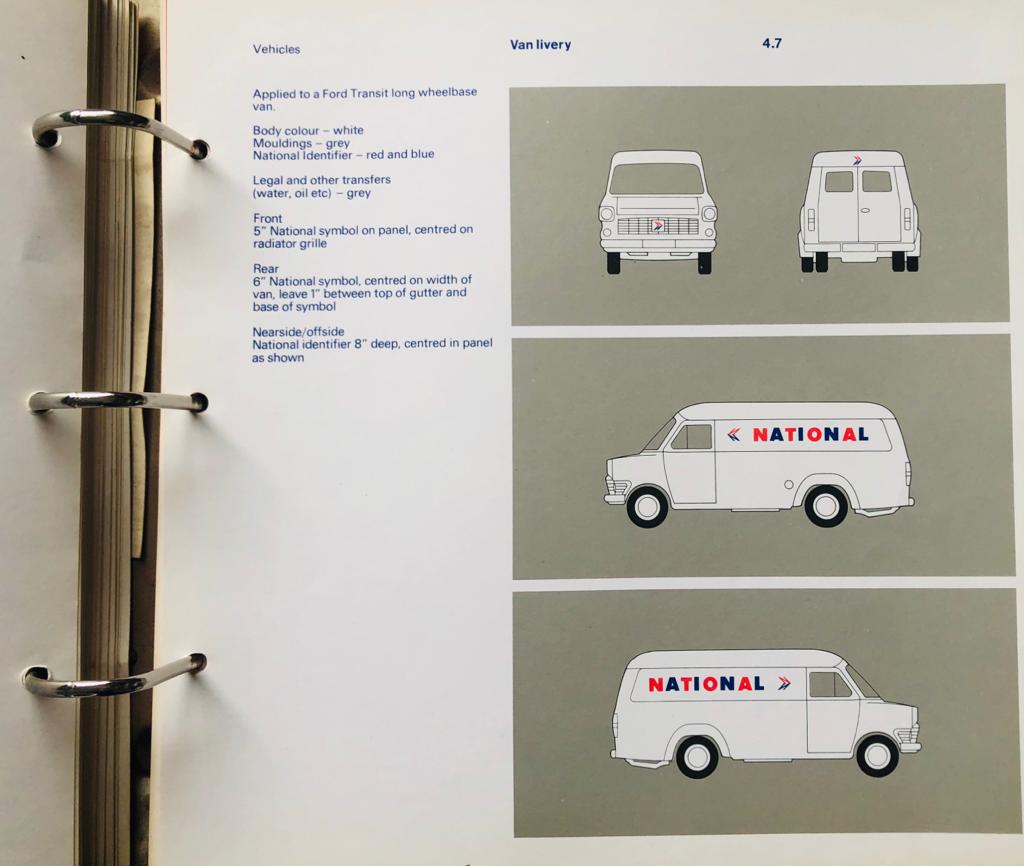
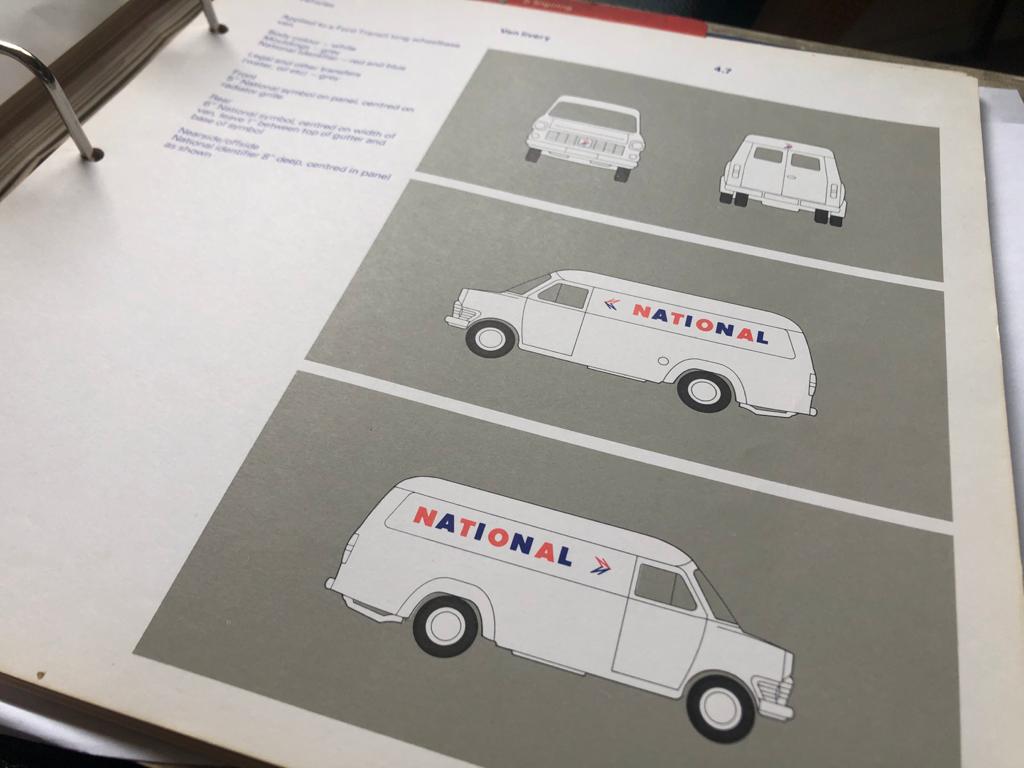
The 1975 NBC manual had only this to say on applying the corporate identity to service vehicles. Local company identities were not envisaged.

Reference to the appropriate page shows a medium size van as an example for the prescribed application. Unlike PSV vehicles where interpretation was relatively restricted, the Service Fleet was far more varied and the NBC allowed this one illustration to guide all other types of vehicle. This should have been straightforward as basically it was a variation on the Central Activities Group (CAG) coach livery, all-over white with red/blue NATIONAL lettering. Oddly, apart from the small legal lettering, there was no advice for the fleetname, which for CAG coaches initially had been a very small ‘company identifier’ underlined in the local company’s bus fleet colour, so if followed as per the manual, these vehicles would have been left anonymous across the NBC fleet.

Image 1 Trent A30 AEC Militant, as per corporate guidance, apart from the inclusion of Trent in red.

While that was the official guidance, in practice each fleet choose its own interpretation. A few did follow guidelines to a certain extent: Trent was a good example of compliance, with white applied to most of its ancillary fleet apart from its tree-lopper, which received all over yellow.

Image 2 Trent A55, again in the mid-1970s Trent followed the manual closely. A55 was a Bristol LD Driver training vehicle.

Ribble followed for its Trainers and some Breakdown lorries. East Kent and Alder Valley also had white vans, though Alder Valley replaced NATIONAL with its fleet name, as did Oxford South Midland.

The rest of the fleet contained a huge variety, rule of thumb was the use of the fleets base colour, ie Grass Green or Poppy Red, though I have no evidence of NBC Blue being used on Service Vehicles.

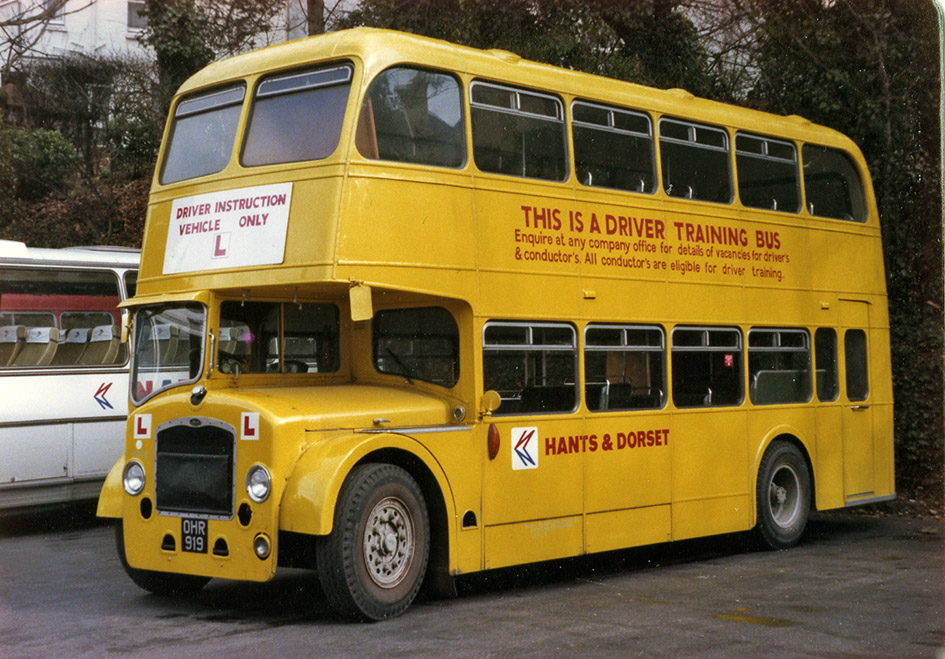
Image 3 Hants & Dorset 9092, apart from the corporate fleet name, Hants & Dorset applied carried this livery over in 1972, with a recruitment message along with the lettering stating the bus’s use.

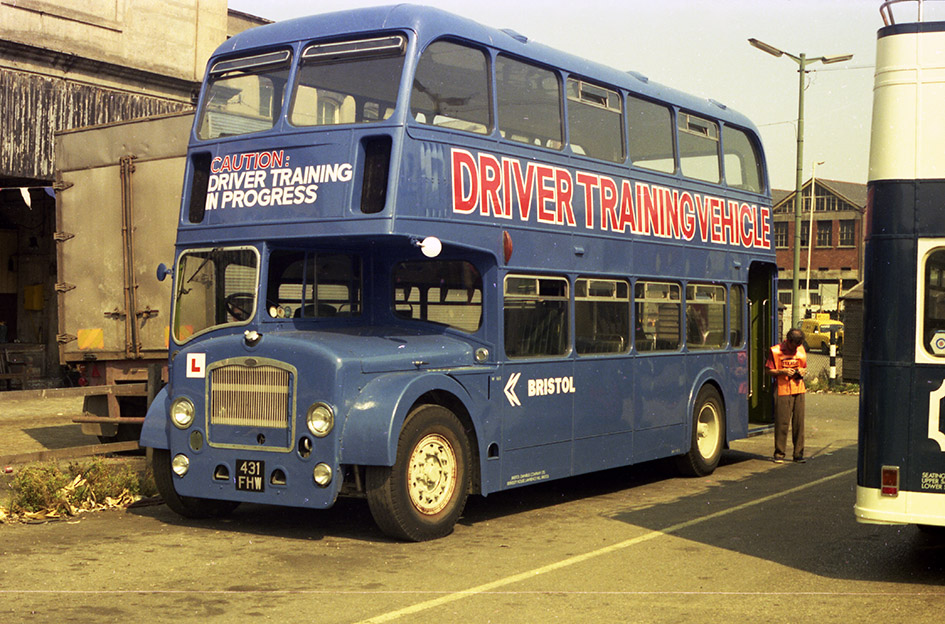
Variation of this application depended on the company, Crosville choose unrelieved Green on its vans and lorries and a dual-purpose livery for its recovery vehicles including it impressive AEC Matador Heavy Recovery Vehicle. National Welsh treated its vans in dual-purpose red/white but used yellow for its Recovery and training vehicles. South Wales often used red or yellow but with no fleet name. With these vehicles, variation was the running theme across the corporate NBC! The livery of Training vehicles depended on the fleet, Western National, Maidstone, Hants & Dorset, Eastern Counties use all over yellow, with variations on lettering; Eastern National and latterly Bristol, had used all over dark blue, Crosville applied a broad white band between the decks, as did Lincolnshire.

Image 4 Bristol W160, after years of using cream with an orange band, Bristol adopted the same livery for trainers as Eastern National.
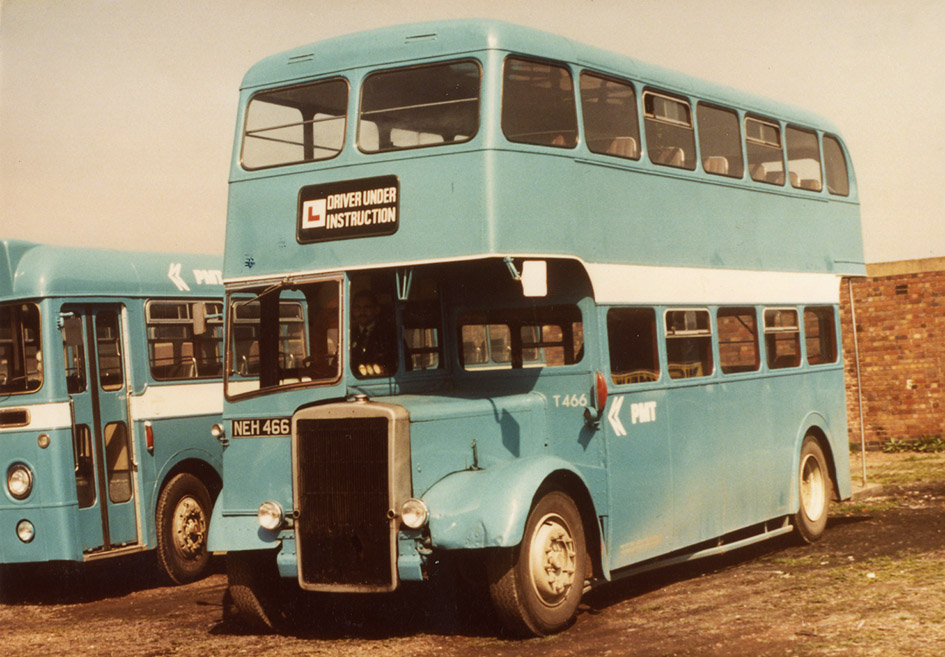
Image 5 PMT T466. Potteries trainer T466 display the unique non-standard blue in use in the mid-1970s, letter it used yellow.

Occasionally this lack of strict abidance would see the discreet way of continuing pre-corporate practices, initially Bristol applied Orange/Cream to much of its SV fleet, Southern Vectis applied underlined gold serif fleet names on its dual-purpose liveried van for a time and West Yorkshire perpetuated its use of non-standard green to the majority of it service fleet (apart from Trainers) throughout the 1970s!          

Image 6 East Midlands T2. For its small fleet of trainers East Midland was another company to adopt a unique non-standard livery, this time a shade of dark red
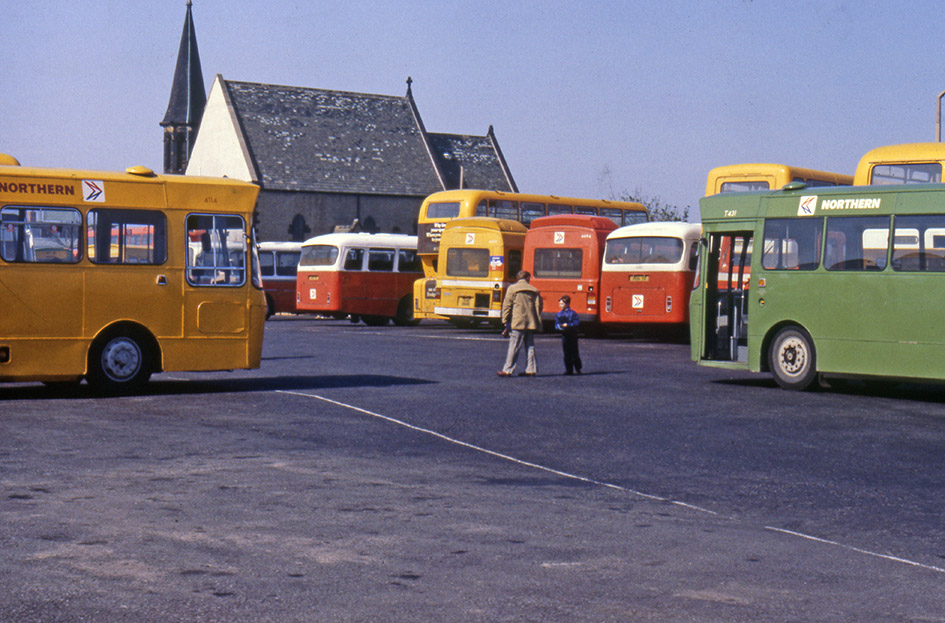
Image 7 Northern T431. Northern General was unique with the NBC in using yellow for its service buses, where they were in cooperation with Tyne & Wear PTE, therefore it changed to green for it Training vehicles, to avoid confusion with its buses. This photo illustrates the reasoning for this colour!

It would not be possible to list the huge variety of interpretation that companies used, many changing within the corporate period! As time progressed particularly into the 1980s livery guidance changed as well, yellow became the standard livery for Heavy Recovery lorries, possibly because of legislation, vans could be seen carrying adverts to promote commercial activities, and vans could be seen in standard factory colours, possibly a cost saving measure, or just white as they where meant to be from the start!        

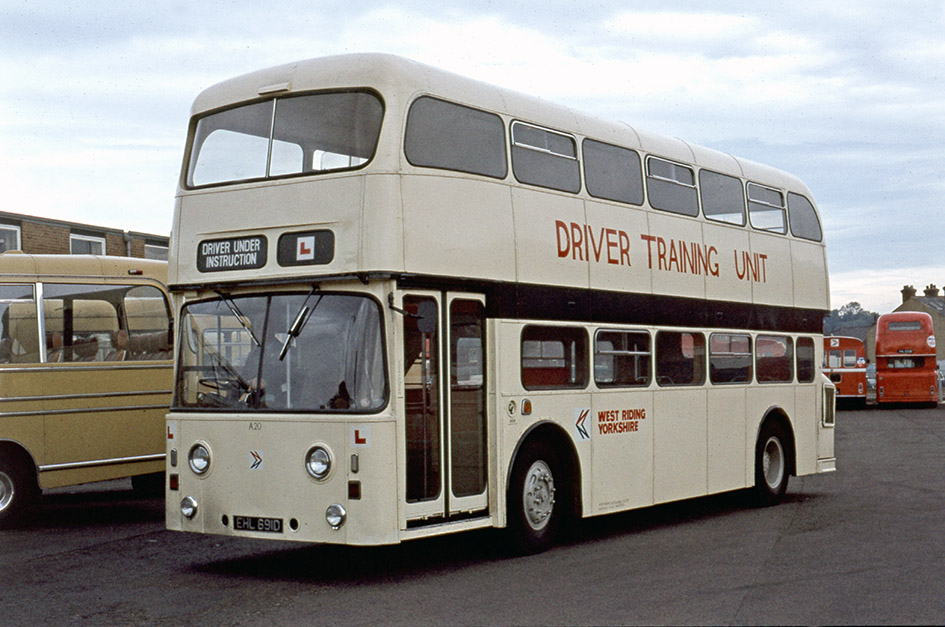
Image 8 West Riding A20. West Riding applied cream and black to its trainers, along with some bespoke signwriting which would have attracted the disapproval of NBC’s central projects team. Yorkshire Traction did also use similar livery for some of its training fleet.
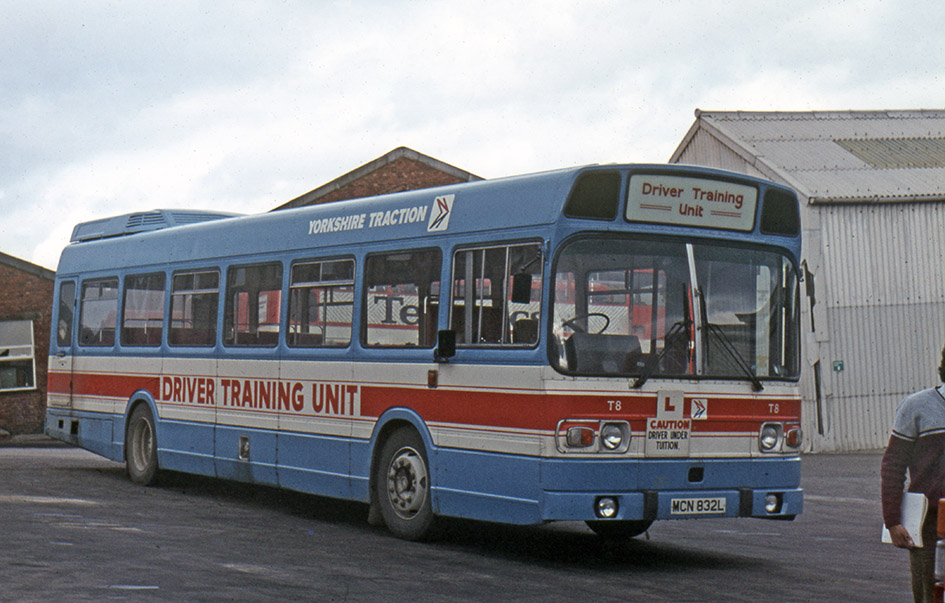
Image 9 Yorkshire Traction T8, in the mid-1970s YTC changed to this distinct Red, White and Blue livery for its driver trainers, latterly this livery could be found on some West Riding/Yorkshire trainers.
Image 10 National Welsh E8. The Western Welsh group favoured all over yellow for its recovery and training fleet from 1972 onwards, Bristol MW E8 is typical of its application.
Image 11 Bristol W144. Bristol had used Orange/Cream prior to 1972 and perpetuated this into the corporate era for a number of service vehicles, though this Bristol MW conversion has white in place of the cream.
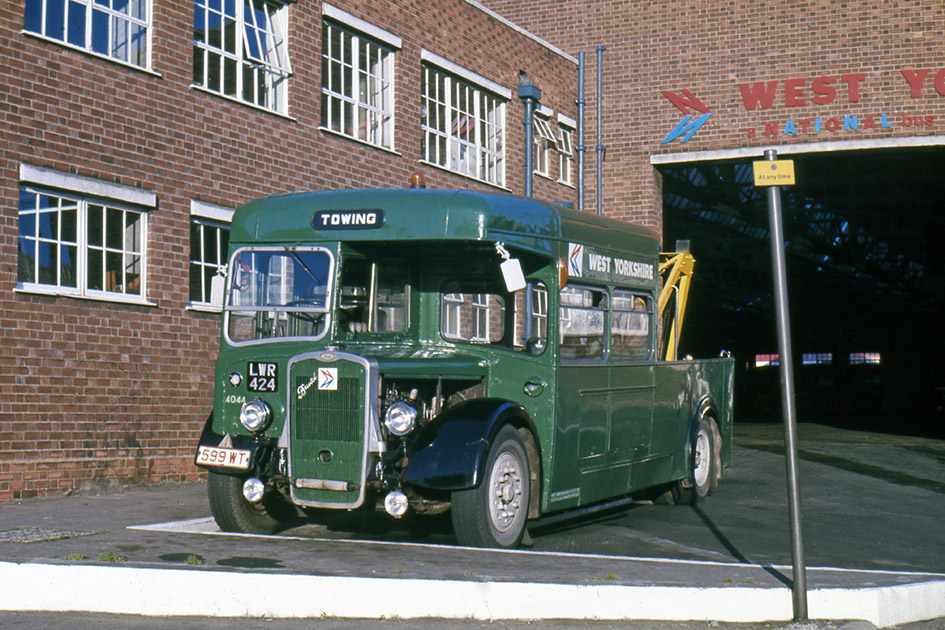
Image 12 West Yorkshire 4044. West Yorkshire a Poppy Red company continued using green for the majority of its service fleet throughout the 1970s. Bradford’s’ attractive recovery vehicle 4044 survives in preservation in this livery. 

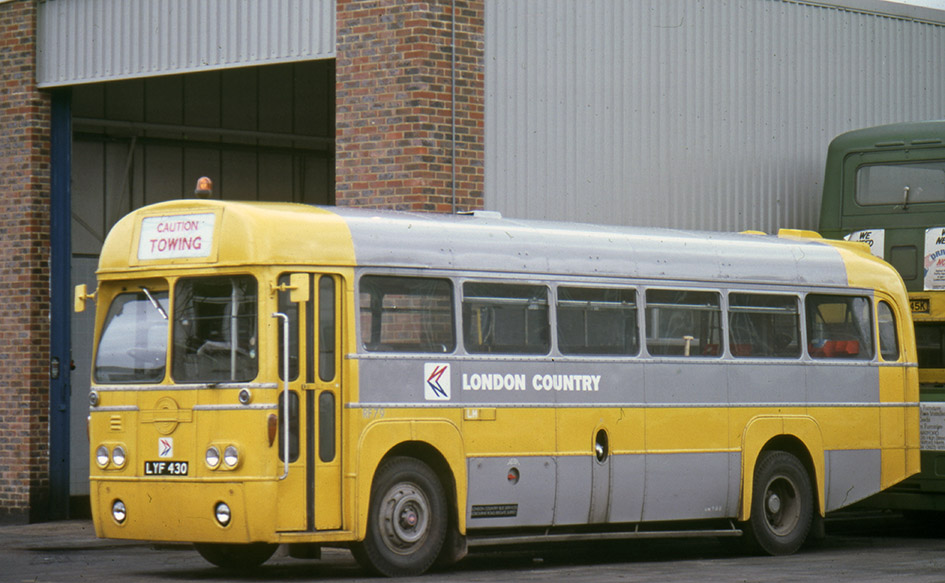
Image 13 London Country RF79. LCBS converted three AEC RFs into Towing vehicles, all receiving variations on the yellow and grey livery. LCBS was formerly part of London Transport, which used grey for many service vehicles.
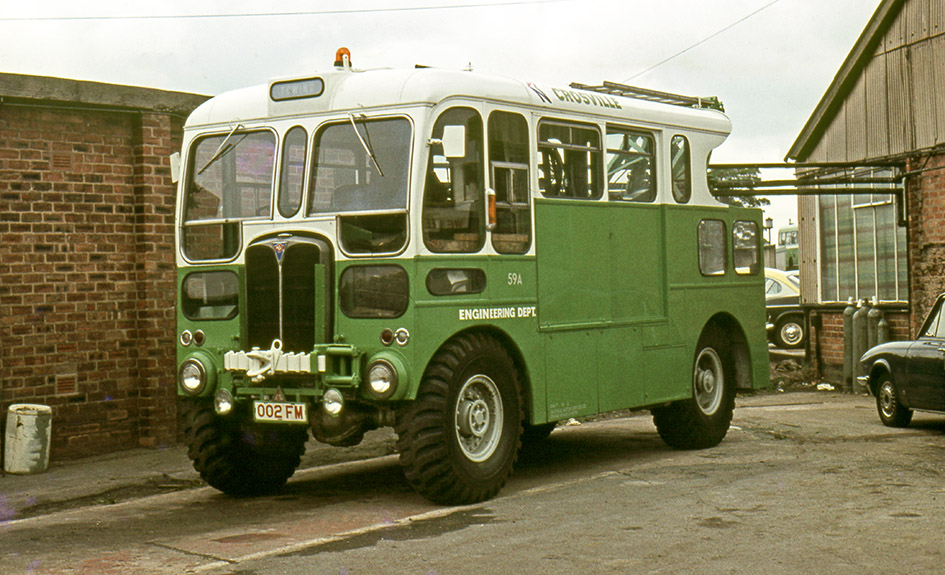
Image 14 Crosville 59A. After 1972 Crosville used only NBC green (some with white) for all its service vehicle, only in the 1980s did other colours appear, AEC Matador 59A, seen here, eventually received all over yellow.
Image 15. Western National RV8.  Western National group, including Devon General, used all-over yellow from 1972 for all its heavy recovery lorries, AEC Matador RV8, looks superb with its company-built bodywork.
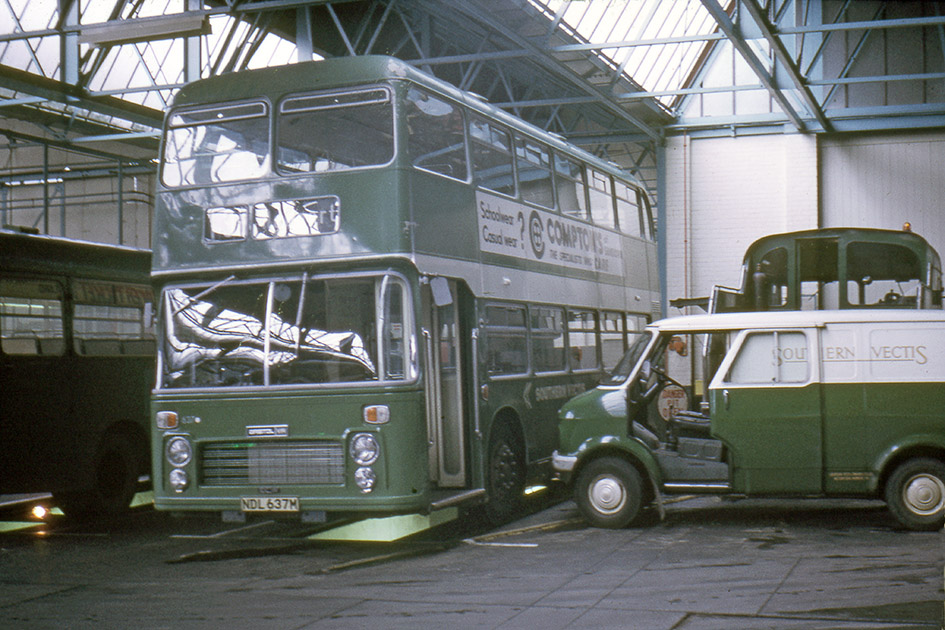
Image 16. Southern Vectis 011. Southern Vectis Bedford CF van number 011 clearly show the use of pre-corporate lettering applied to the fleet’s vans in the 1970s.
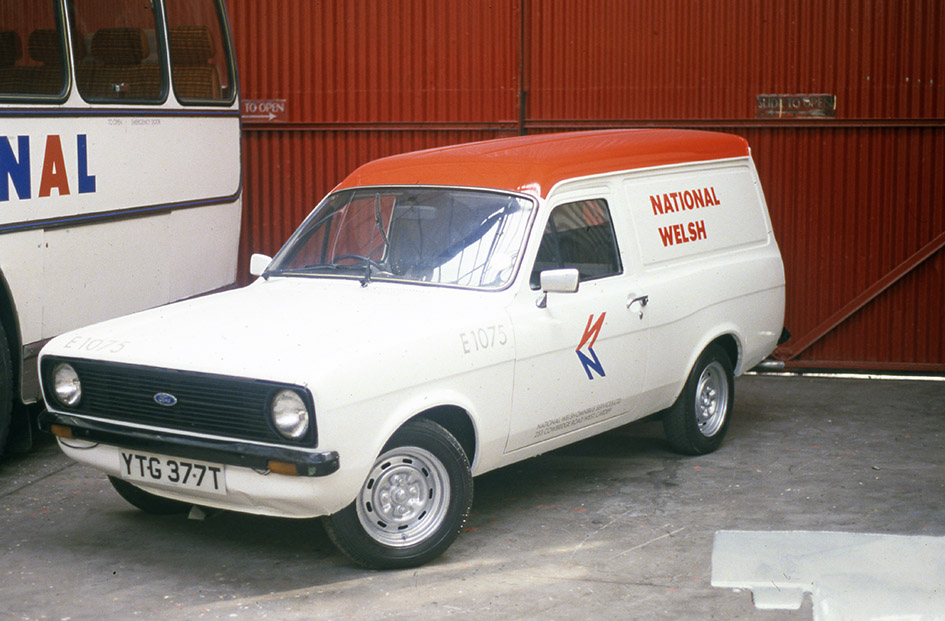
Image 17. National Welsh E1075. Yet more variety, Ford Escort Mk2 van carries white with a red roof. Later the company painted its small vans in a version of dual-purpose livery.
Image 18. Crosville G759. For other duties companies adopted bespoke liveries, Crosville’s Information bus G759 a Seddon Pennine, gained and orange and red stripe to the NBC green, other companies ‘MAP’ buses received a range of bespoke liveries. 
National Bus Company Service Vehicles 1972-1986 by [Michael Hitchen]

Many thanks to Michael Hitchen for providing this guest blog, including the photographs from his own collection. Michael is an authority on NBC’s liveries, and his book on NBC’s service vehicles is available from Amberley Books here: National Bus Company Service Vehicles 1972-1986 – Amberley Publishing ; and also from Amazon in hard copy or Kindle format.

Categories
Applying the identity Bristol Design East Kent London Country Staff

National uniformity

As part of its comprehensive rebranding, NBC’s corporate identity extended to what its staff wore.

The NBC Corporate Identity Manual is best known for its uniform bus and coach liveries. But it was also intended to address standardisation of a wide range of other aspects of NBC’s presentation to its customers, including clothing and uniforms.

NBCs constituent companies had started experimenting with uniforms as part of their coach branding – in this example, East Kent adopted bright orange uniforms for coach hostesses with a cut and cap reflecting fashions of the era during the late 1960s. The driver on the other hand sports a contrasting very traditional uniform.

Section 7 of the NBC Corporate Identity Manual dealt with “uniforms and related items” such as cap and jacket badges.  But there is some mystery over section 7. We believe it was drafted – indeed NBC put a lot of work into uniform design – but may not have been issued: curiously the copies of the Manual we have seen omit it. We’ll be digging deeper into this over the coming months to make sure that a reissued corporate identity manual includes as much of the issued material as we can source. Please get in touch if you can help.

NBC’s constituent companies inevitably had a variety of styles, many unchanged  since the 1950s.  With a few exceptions – notably innovations in the coach market to reflect the speed and modernity of the emerging national motorway network – uniforms tended to be very traditional with heavy wear-resistant fabrics in black or dark blues, round peaked caps and occasionally traditional braid to indicate seniority.  Coach crews often sported light-coloured overalls and matching caps.  But – as with liveries – there tended to be substantial variation between local companies.

NBC’s corporate identity sought to do away with all that, and to introduce a standard look for crews and bus station staff. Crews and staff were to be the human face of the business, so their attire needed to reflect the modernity the business aimed to project. NBC and Norman Wilson’s team wanted staff to project the company’s modern image as much as the vehicles, and investigated overseas practice as well as drawing inspiration from constituent companies’ innovations in the coach market.

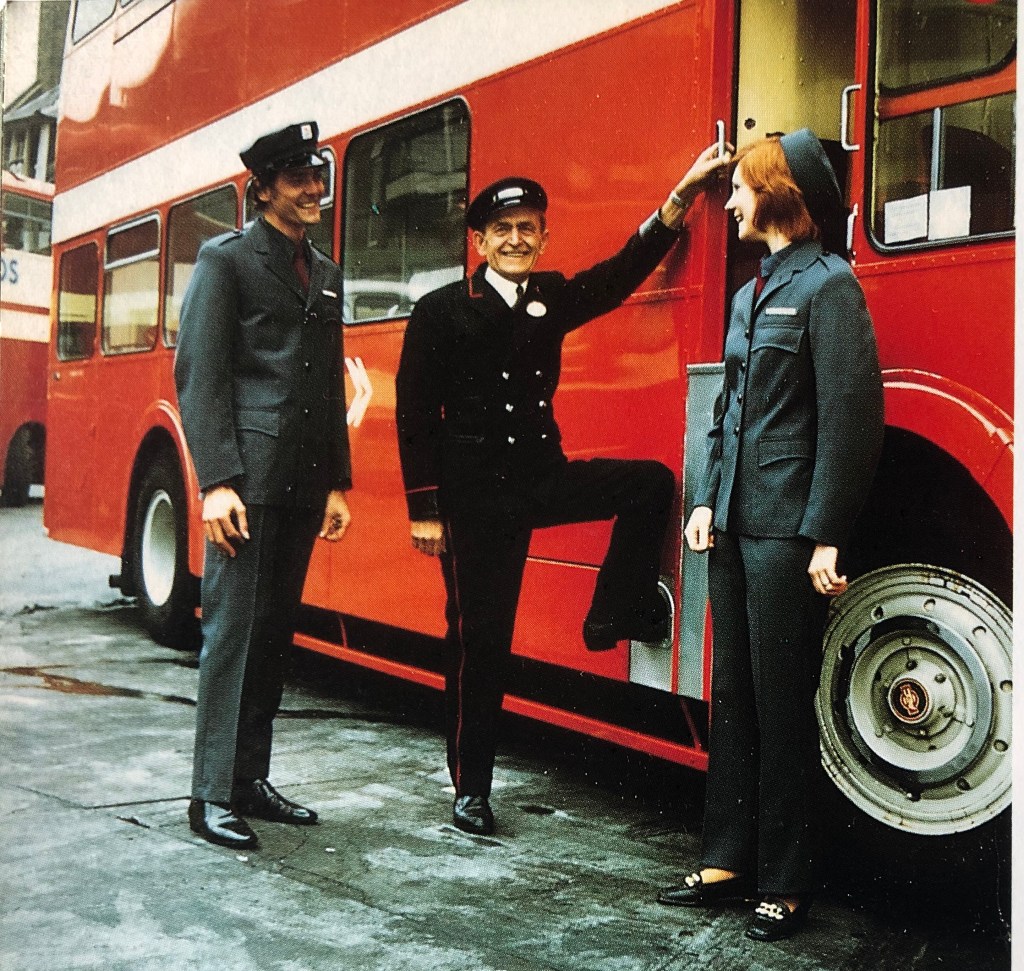
Bus crew uniforms saw a radical change. Adopting a much more modern look, Wilson and his team adopted a sleek modern-cut in a blue-grey serge, with a similar lightweight version for summer. The cut of the uniform for women was very similar, but with a simpler cap. In this NBC publicity shot at London’s Victoria Coach Station, models Ray Rhodes and Judy Neale show off the new look, contrasting with driver Alf Vassey, of East Kent’s Dover depot, who wears the company’s very smart traditional uniform. They pose with an East Kent AEC Regent in the new corporate colours

Out went dark colours, and in came lighter blue-grey suits with a relatively modern cut, greater comfort and incorporating larger pockets to assist with carrying paperwork. Out went the traditional round peaked caps and in came a modern, Germanic-looking octagonal cap in the same shade of blue-grey, sporting a smart metal ‘double-N’ arrow badge.

In new NBC uniforms with London Country badges, Ray Rhodes and a fellow professional model pose for a publicity shoot in 1972. The uniform for men incorporated a radically different octagonal cap design, almost unseen in Britain but more common in northern mainland Europe. For women, a cleaner-cut pillbox hat was adopted.

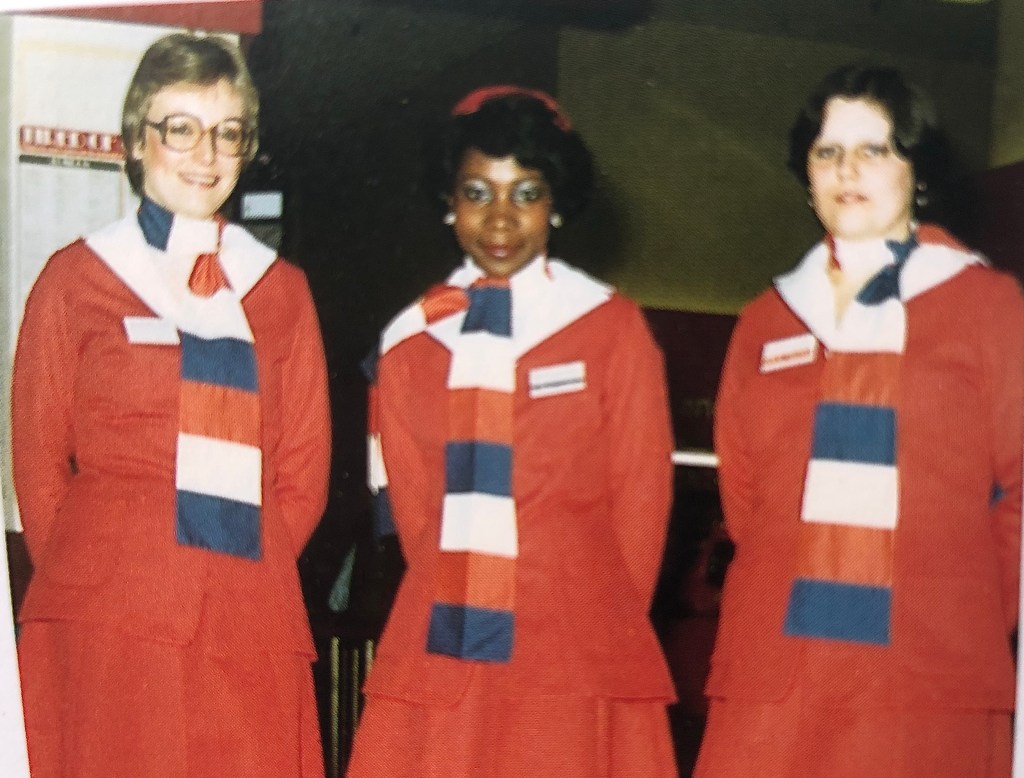
Office and counter staff at bus stations counted among them many more women than the drivers and crews. Various uniforms were created for women over the years, typically in brighter hues of the corporate colours, with styles evolving with fashion more than the men’s uniforms.

A Bristol Omnibus Company driver wears his octagonal crew cap, during a driving demonstration for the NBC training film ‘They don’t grow on trees’, made in 1979.
The women’s coach uniform came used various combinations of the corporate colours – here is an early variant in corporate blue and lined in red.

Whereas the changes in bus liveries are well documented, pictures of the changing uniforms through the NBC period are relatively few and far between. If you have any photos you’d be happy for us to use to illustrate the evolving staff attire for bus and coach crews and for bus station staff, do let us know. We’ll add any photos and stories in the coming weeks.

NBC’s corporate identity picked up on the best of its constituents’ designs – shown here, an early coach hostess uniform, similar to the East Kent National Travel version above, but in the NBC colours.

While the men’s uniform changed relatively little until the 1980s, women’s uniforms were more regularly updated as styles changed. This version shows a variant of the bus station staff uniform from the early 1980s.
Coach staff saw more change during the NBC period than their bus counterparts. Here we see the male and female uniforms adopted in the early 1980s for National Express drivers and crew.