Categories
Applying the identity Buses Hebble Lincolnshire Northern Tyneside Yorkshire Traction

NBC’s true colours? Modern shades of red and green

The Corporate Identity adopted bold, modern shades of the industry’s traditional green and red for local services. We crunch the numbers on the adoption of the new colours across the country.
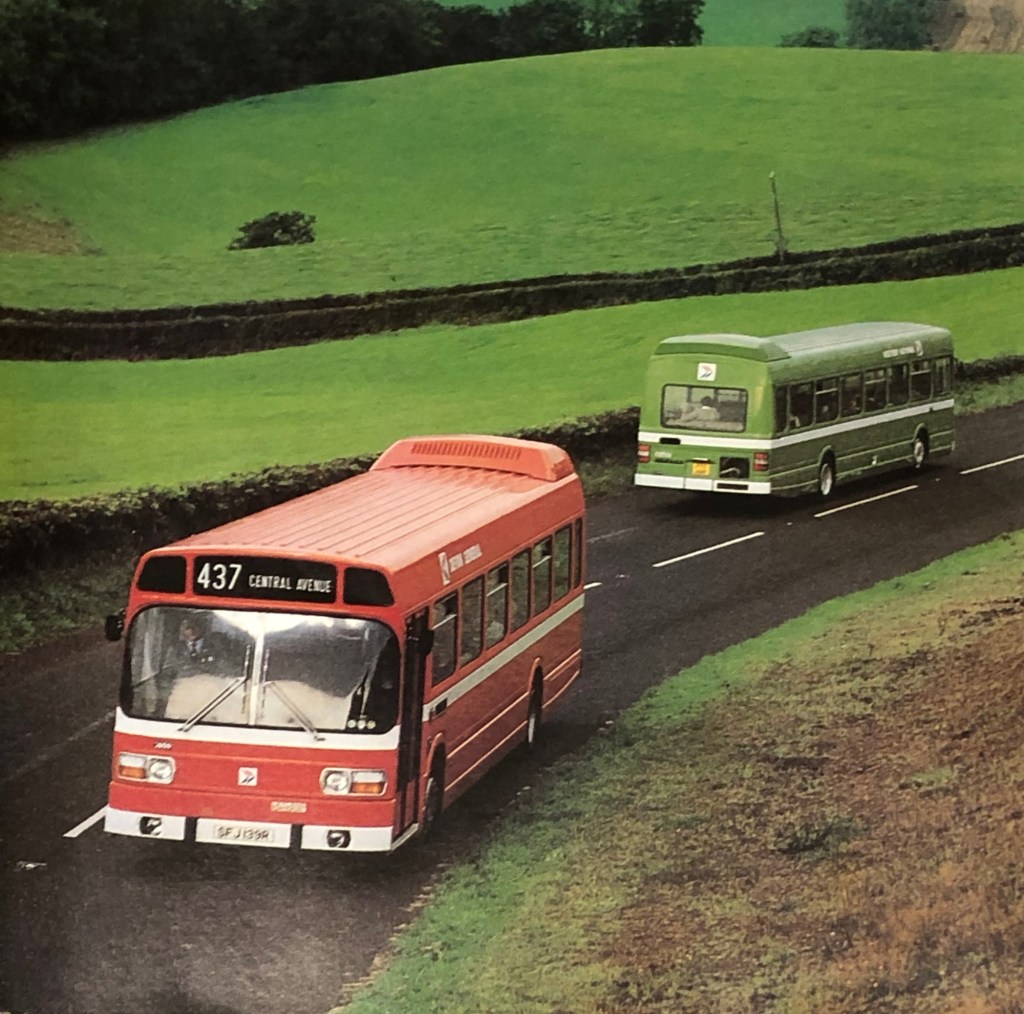
From NBC’s 1976 advert ‘The go between’, two of the company’s Leyland Nationals cross paths somewhere in the west country: a green vehicle from Western National, and a red Devon General bus. (Photo: Tony Whitehead, for NBC).

In 1972, the National Bus Company adopted Norman Wilson’s recommendation to standardise on two colours for its buses. Wilson had argued for a thorough reworking of NBC’s corporate identity, adopting the three key elements of a distinctive symbol (his ‘N’-and-shadow-arrow), distinctive typography (his bespoke National lettering), and disciplined use of bold corporate colours.

Red, blue and white had been chosen for the initial National branding early in 1972, reflected in that year’s first edition of the Corporate Identity Manual, developing the concept of the ‘white coach’ uniform national network. The approach to the identity for local buses, announced in July 1972, stretched Wilson’s disciplined colour scheme, adding green to the corporate palette.
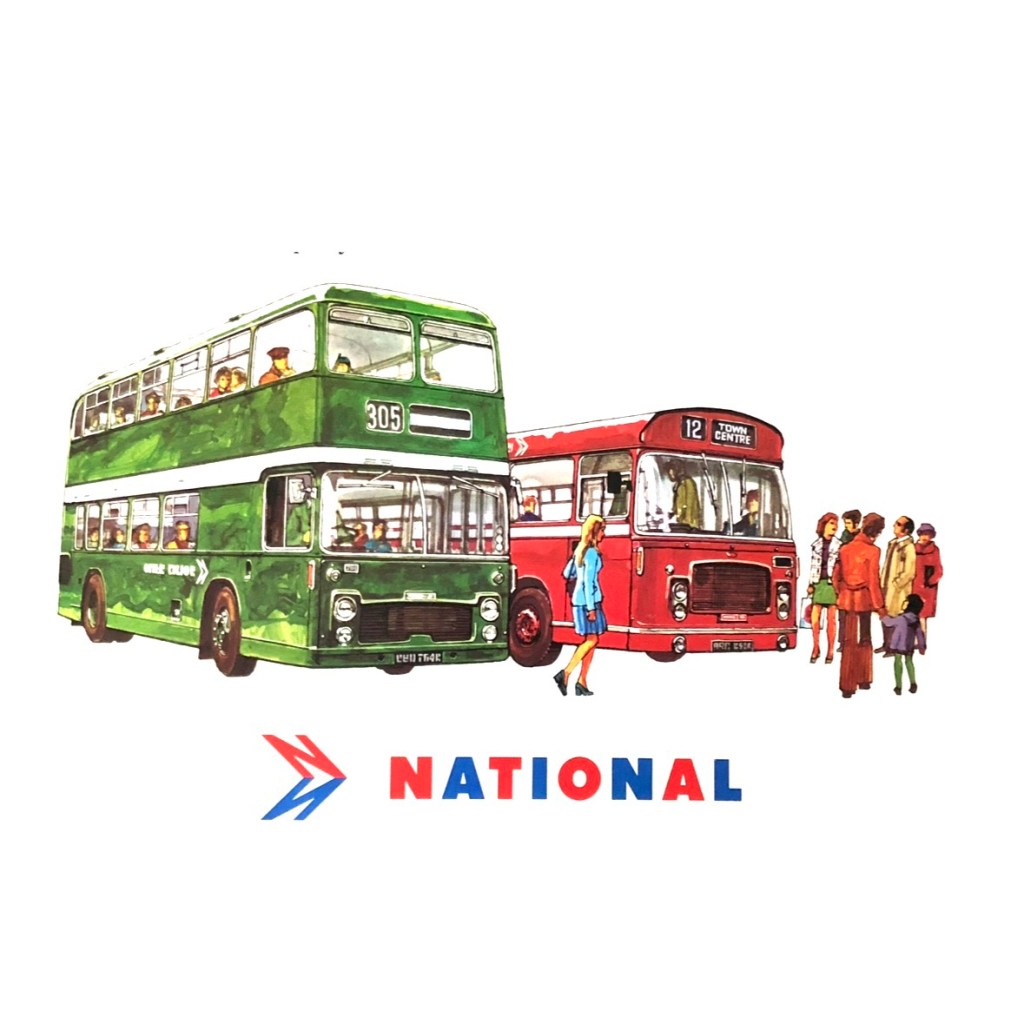
Though the vibrant shades of red and green chosen were intended to signal a move towards a modern industry and away from the from the ‘drab’ darker colours previously used by local bus companies, green was retained as a nod to the companies’ traditions, intended to retain an element of pride and goodwill from staff and passengers alike. Adopting a single bus colour was thought to be too disruptive, and possibly confusing for passengers in parts of the country where NBC subsidiaries overlapped and provided services on different routes.
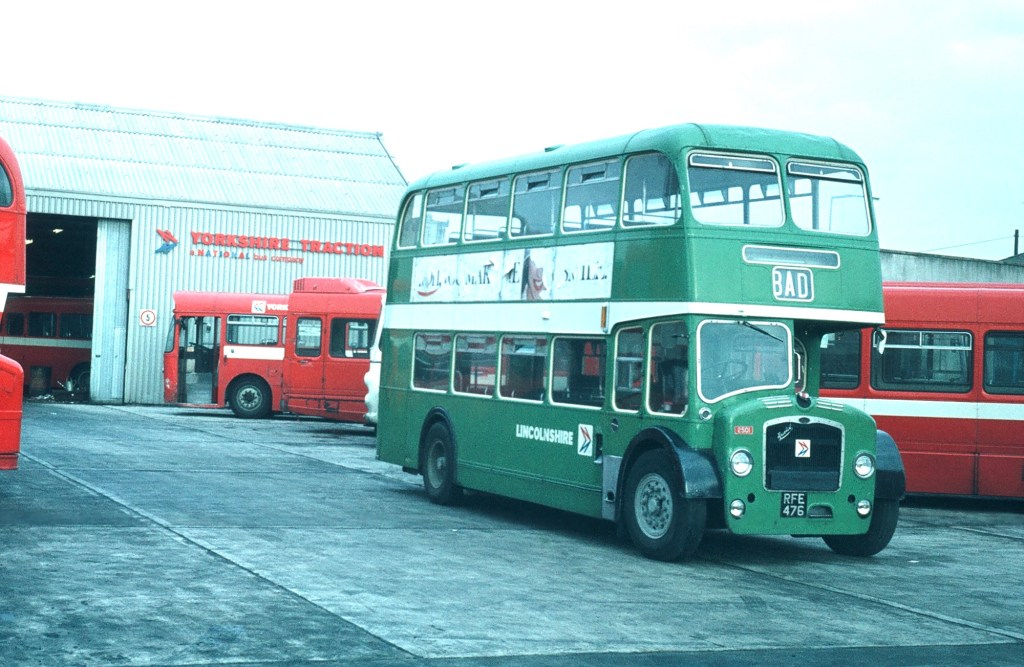
Visiting Lincolnshire Road Car green Lodekka 2501 in a sea of red at Yorkshire Traction’s Doncaster depot, in around 1979.

Blue, meanwhile, was used by relatively few local companies, so though it would have been a better fit with the National identity, it was argued that adopting it nationally would have required more upheaval. In practice, of course, the introduction of the new identity required all vehicles to be repainted in the new colours anyway, so whether switching to blue would have been more challenging logistically is a moot point.

Norman Wilson appears to have disapproved of the compromise to include green in the corporate identity so fiercely that the colour green does not appear on a single vehicle illustration in his otherwise comprehensive Corporate Identity Manual, even illustrating liveries for ‘green’ companies in red. (The reprint of the Manual will add in some green illustrations as extra pages.)

At Eastern National’s Chelmsford works, Fred Brewster applies the new corporate identity lettering and symbol transfers to a Leyland National in 1973. Read more in the blog on corporate disobedience. Picture: Tony Whitehead/NBC.

What proportions of NBC’s fleets went leaf green, and how many buses ended up in red? How many local fleets adopted other colours?

To answer this question we accessed the initial tenders for fleet name transfers in Wilson’s new National lettering, filed away in The Bus Archive. The tender calls for printed transfers for around 18,000 vehicles, consisting of 5” high fleet names and monochrome versions of the NBC symbol. The NBC symbol was ordered in a single version, as the monochrome version could be rotated to point left or right. The later 1976 colour panel bearing the NBC symbol had to be printed with separate versions facing left or right – each having the red ‘N’ on the top, and its shadow in blue below.

A tender document for the bulk purchase of NBC symbol and fleetname transfers, in preparation for the roll-out of the corporate identity, showing the numbers needed – roughly double the number of vehicles in each operating company’s fleet. The letter was sent to suppliers by A O Timms in NBC HQ’s purchasing department at New Street Square in London and is dated 25 July 1972, just a week after the new identity for local buses was announced. Source: The Bus Archive.

Initially NBC offered both symbol and fleetnames in the corporate identity standard white as well as a variant in cream to allow the new graphics to be applied – incongruously – to buses still in their traditional colours with lining in cream, without having to wait for a repaint. In practice few companies took up the cream option, preferring to adopt the new standard straight away.

Only a few local operating companies took up the offer of cream-coloured fleet names in Norman Wilson’s National lettering and NBC symbols. The thinking was that the identity could be rolled out faster by matching the new graphic design to the traditional liveries lined out in cream, rather than waiting for buses to be repainted. In practice the mix of Bauhaus-inspired graphic design with traditional liveries usually looked quite odd. In 1972, Alder Valley Loline III number 503 is undergoing its own transition from the green livery of Aldershot and District, into the new combined Alder Valley fleet, and will eventually end up in poppy red. Much later, in preservation, it will turn back into its traditional Aldershot and District colours, which it carries today. Picture: Richard Price collection.

These early tender documents from July 1972 indicate the numbers of fleet name transfers needed by each company, asking suppliers to quote for the transfers in either cream or white, but do not show which local bus companies have asked for the cream version, nor how many. The tender invitation also refers to the symbol and fleet name lettering “with black outline”. Originally Norman Wilson and colleagues thought that a thin black ‘keyline’ would be needed to allow a crisp edge to the graphics, and this was reflected in the Corporate Identity Manual of June 1972. However testing proved that the method of applying transfers to painted vehicles gave a sharp enough look, so in September a simplifying modification sheet was added in the Manual, stating that ‘transfers of name and symbol [will be] in one colour only. Contrary to page 8 the “thin black retaining key line” is deleted.’

This sheet showing fleet names prepared in Norman Wilson’s National lettering was circulated with the tender invitation letter to transfer suppliers. It includes Hebble, which by 1972 had lost most of its bus routes to adjacent NBC operating companies, the company becoming solely a coach operator until its absorption into National Travel (North East) in 1973. The Hebble fleet name was not used once the corporate identity was adopted, except as a coach brand, which in turn was dropped in 1973. Source: The Bus Archive.

The numbers shown in the chart don’t precisely match the fleet lists of the time, as there was some over-ordering of transfers (the breakdown for Northern’s subsidiaries uses the PSV Circle’s fleet listings for 1972). By halving the order numbers, we have an approximate number of local buses (stage and dual-purpose) in use in each local fleet in mid-1972, as the corporate identity was being rolled out.

These show that, on adoption of the corporate identity in 1972:

⁃ of 42 local bus companies, 24 adopted red as standard, and 14 green, while 3 retained one of the several shades of blue. Northern and its subsidiaries operated a mix of red and yellow fleets from the early 1970s, though on adoption of the new identity red was used except in Sunderland District which retained its ‘midnight blue’.

⁃ around 55% of buses were adopted the new poppy red, a bit less than 40% leaf green. Less than 3% retained blue, while large parts of Northern General’s fleet of around 500 vehicles, together with a smaller number of buses from Northern subsidiaries Tyneside and Tynemouth, later turned out in NBC yellow, complementing the cadmium yellow adopted by Tyne and Wear Passenger Transport Executive for its own buses.
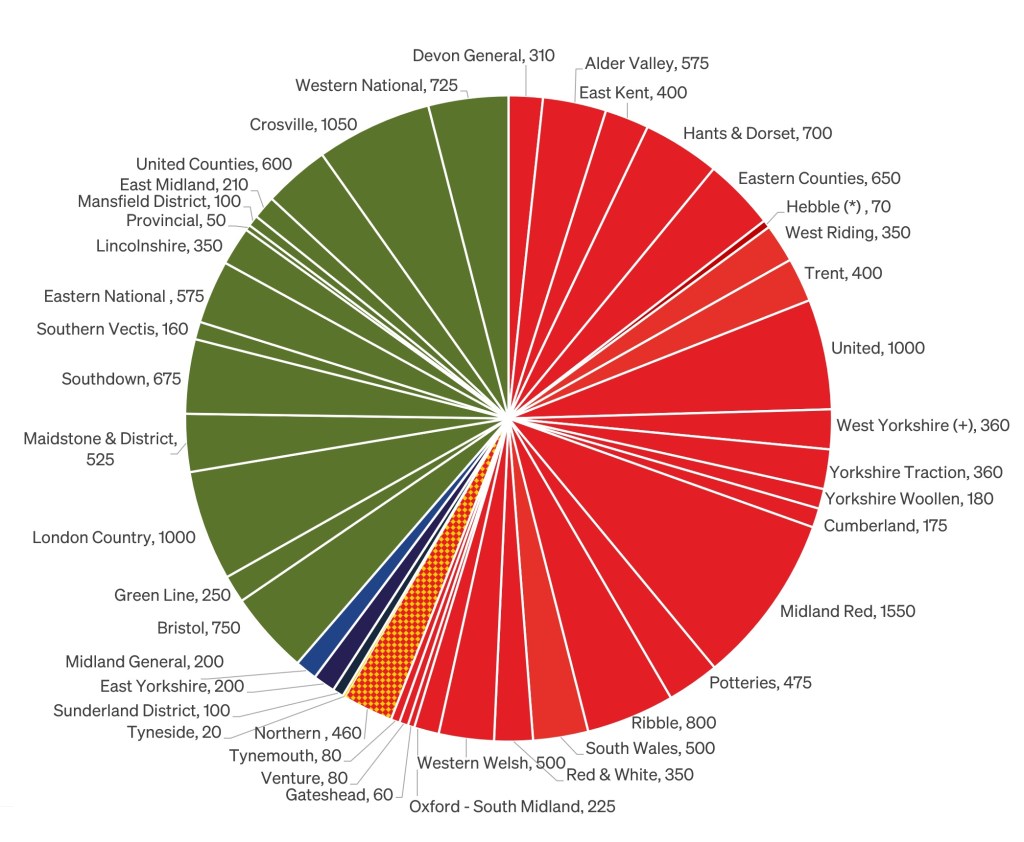
The colours of NBC’s fleet of around 18,000 local buses on adoption of the corporate identity. Calculations of local bus allocations, based on fleet name orders from the July 1972 invitation to tender document.

Incidentally, the labels ‘poppy red’ and ‘leaf green’ – widely used by designers, enthusiasts, preservationists and staff across the industry – do not appear anywhere in the company’s documents, including the Manuals! The new colours are referred to simply as National red and green.
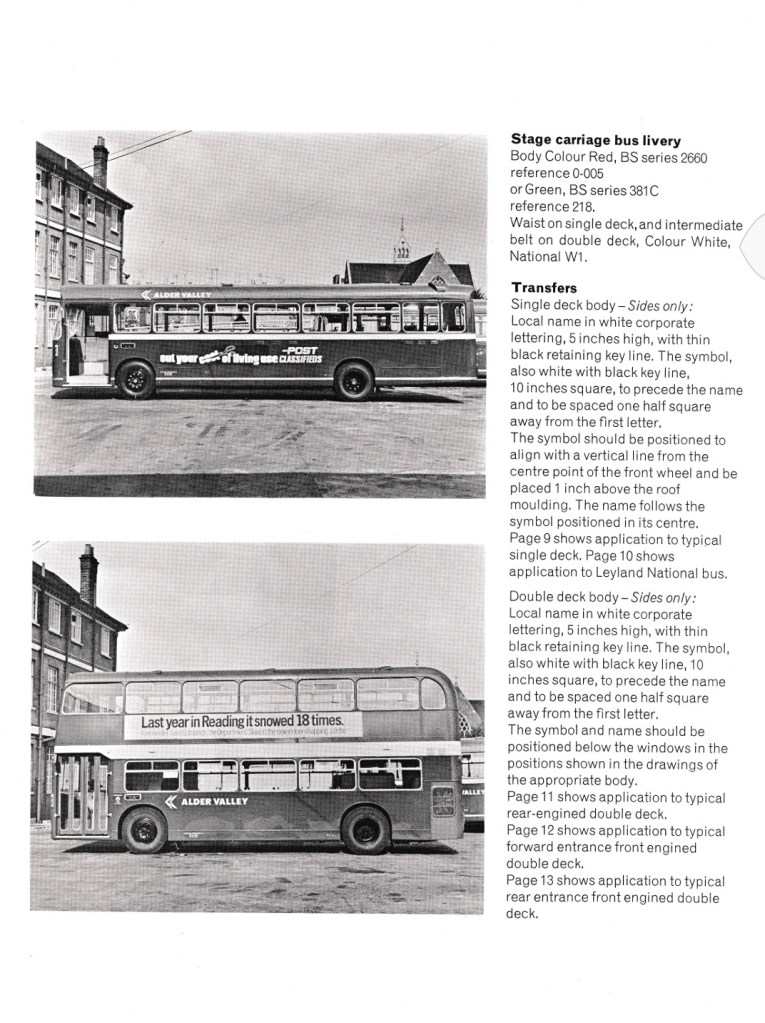
Instructions from the 1972 edition of the Corporate Identity Manual explain the specification and position of the fleetname and new NBC symbol. Source: NBC Manual Project.
An outpost of NBC green in the north: on adopting the corporate identity, Northern General subsidiary Tyneside replaced its traditional dark shade of green with red, and then yellow as it operated within the Tyne and Wear PTE area. But briefly, some of its vehicles, still in green, had the NBC lettering and symbol applied. A rare picture of Tyneside Daimler Fleetline 93L en route to Newcastle in 1972. Photo: Michael Mccalla.

Read more about how the modernist-inspired design of the NBC identity was shaped by Norman Wilson’s design influences, combining his three key elements: bold, uniform colours, his distinctive typeface, and a striking monochrome version of his NBC symbol, wordlessly conveying the nature of the business, all drawn together in a grid-based layout which brought a sense of uniformity and modernity across disparate companies and an enormous variety of vehicle types.

If you have recollections of the roll-out of the new livery, how it was managed, or remember your initial reaction to it, please let us know.  We’d be happy to include these in a future blog, and perhaps in the Manual book itself. Get in touch using the form on this page, or the contact page here: https://nationalbusmanual.com/contact/
Categories
Applying the identity Buses East Midland Green Line Mansfield District NBC50 Norman Wilson Trent West Riding Yorkshire Traction Yorkshire Woollen

A modernist summer on the buses

Fifty years ago, in August 1972, the new identity was being rolled out across England and Wales

It’s a miserable week of weather at the start of August, with low temperatures across Britain and the odd spell of torrential rain. In depots across England and Wales, managers, engineers are already embroiled in the business of changing their vehicles over from their long-established, traditional colours to the new Corporate Identity.

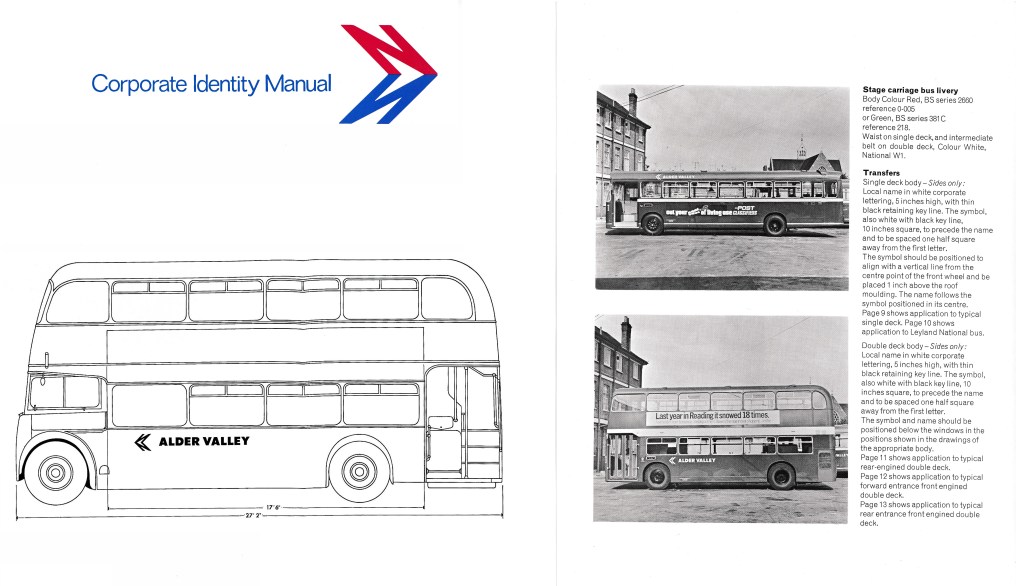
Pages from the first edition of the NBC corporate identity manual of 1972, issued shortly after the 19 July letter. Source: NBC/The Bus Archive.

Since instructions and diagrams were sent to the local operating companies in June, the first pages of the new Corporate Identity Manual have been supplemented with detailed instructions on how to apply the new liveries, paint specifications and the precise configuration of the new symbol and company names. On 11 August, Ron Whitehouse, Group Public Relations Officer, writes to the General Managers of the 40 or so subsidiary companies issuing additional pages for the manual, the first in a series of drawings showing how the new identity should be applied, including the precise position of the new symbol and lettering, across a range of typical vehicles from venerable double-deckers to the brand new single-deck Leyland National, designed and manufactured as a joint venture between NBC and Leyland Vehicles.

Coaches are the priority as NBC seeks to capitalise on the growing recognition of the new ‘white coach’ express network. For buses, each company has been encouraged to paint a number of vehicles as soon as possible to make sure there is momentum behind a public campaign planned for the Autumn.

Local operating companies have also been encouraged to apply the identity in interim form, applying the new symbol and distinctive lettering to buses their traditional liveries so that it will gain recognition before proper repainting can be done.

Local companies across England and Wales applied the new identity following the precise layout specified in the Corporate Identity Manual, the first loose-leaf pages of which appeared in June 1972, with additional detailed drawings and instructions following over the following weeks for companies to add in to their copy of the Manual. Yorkshire Woollen’s Fleetline 693 appears in the new identity after a repaint. The ‘Yorkshire’ company name at the front is a local addition, and not part of the NBC’s standard specification. Photo and copyright: I T Langhorn.

By and large it’s going well. Coaches are being repainted into white at a rapid rate, while buses are reappearing in poppy red and leaf green as they complete routine overhauls. But there are a few areas which need attention.

First, both Norman Wilson, the design consultant responsible for the new identity, and the NBC’s HQ staff responsible for implementing it, are dissatisfied with the results of the ‘interim application’ using existing liveries and in many cases, cream-coloured lettering to match the old-style lining on buses. Whitehouse’s letter of 11 August suggests that companies “may find it economical to avoid the interim stage of ‘cream’ transfers and apply ‘white’ transfers immediately… For those fleets with waists or intermediate bands of cream, white transfer can be applied and the band painted white immediately without waiting for a total re-paint. For complicated liveries, eg cream window mouldings; more than one intermediate band, etc, this suggestion will not be practical.”

Preparing a bulk order of transfers of the monochrome NBC symbol and company names in Wilson’s new National lettering, Whitehouse asks General Managers to let him know how many white and how many cream transfers they will need for each fleets. An effect of this instruction is that only a few companies adopt the interim cream version of the new identity.

The application of the Bauhaus-inspired NBC symbol and lettering in traditional cream to match the existing liveries blunted the modernising intent of the corporate identity, and was short-lived. Devon General’s modern NBC symbol and fleetnames have been applied in cream to the traditional Exeter Corporation colours of Leyland Titan PD2 no 236, seen in Exeter in 1973.. Picture: Richard Price Collection.

Second, the carefully-specified coach and bus liveries omit a whole category of vehicle, and across NBC company chief engineers are puzzled: Yorkshire Traction’s chief engineer exclaims on 8 August that “there appears to be a gap, in that we do not know what livery to paint our semi-coaches… and I have no instructions on this point.”

For express and tour services, and for local hire, the new National white coach livery is to be used. For local buses, it’s all-over red or green with white bands, depending on ‘the company’s tradition’. But the corporate identity does not yet cover the company’s many ‘semi-coach’ or ‘dual-purpose’ coaches and buses Equipped with coach seats, for many NBC subsidies these provide some of their higher-profile, higher-profit services such as regional express routes or express commuter services on regional routes into London, notably London Country’s Green Line routes.

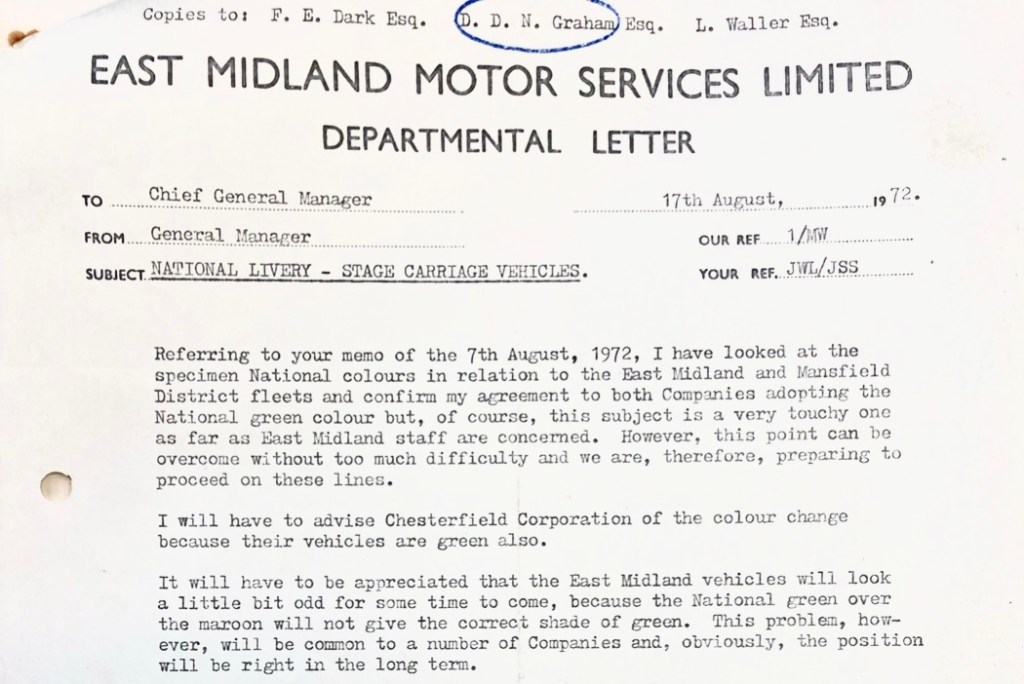
Internal memos from Yorkshire Traction suggest using National white but substituting the local company’s name in Wilson’s new lettering for the ‘NATIONAL’ brand. “To my mind this is an advantage”, he argues, “as we could without too much trouble change vehicles into and out of national livery without a complete repaint.” In a letter to NBC HQ on 17 August, East Midland’s General Manager highlights the problem that “our… semi-coaches have to alternate on stage-carriage [bus] work because they are vehicles receiving bus grant… There is quite a variety of colour styles spread over the years, particularly with coaches … and the only suggestion I can make is that they are painted white with a green band” to differentiate them from ‘normal’ buses. “The semi-coaches will have to be done on a similar basis, although the quantity of green will be greater.”

From the archives: on 17 August 1972, the East Midland General Manager writes on the ‘touchy subject’ of changing company colours as part of adopting the NBC identity. Source: The Bus Archive.

There’s also the question of what to do where the local company’s ‘traditional’ colour isn’t green or red – maroon, say, or blue. Maroon (or ‘dark red’) is generally replaced with NBC poppy red. But the joint companies of East Midland and Mansfield District – using maroon and green respectively – come under pressure to adopt the standard NBC green livery for all of their buses. Their General Manager responds to D Graham at NBC HQ on 17 August relenting: “I confirm my agreement to both Companies adopting the National green colour but, of course, the subject is a very touchy one as far as East Midland staff are concerned.” There are practical issues to deal with too: “I will have to advise the Chesterfield Corporation of the colour change because their vehicles are green also.” And moreover: “It will have to be appreciated that the East Midland vehicles will look a little bit odd for some time to come, because the National green over the maroon will not give the correct shade of green. This problem, however, will be common to a large number of companies and, obviously, the position will be right in the long run.”

The new corporate identity forces some compromises – including the adoption of standard leaf green to replace East Midland’s previous maroon or dark red, reflecting its integration with its sister company Mansfield District. Picture: Martyn Cummins and Richard Price.

To complicate things further, although the company is pressing ahead with the roll-out of the white coach – but “the re-painting of any vehicles cannot be properly undertaken immediately because… the only transfers we have are 50 East Midland suitable for coaches painted in the full National specification, but these have the red line under the Company’s name, whereas, in fact, we are proposing to adopt the National green.”

Having taken the decision to switch company colour from red to green in August 1972, East Midland found itself stuck with a large number of transfers for its coaches with Norman Wilson’s National lettering underlined in red, temporarily halting its roll-out of the new National identity.

Anxieties and practical challenges over which colours to adopt will continue over the coming months. The next blog will look at why, for some reason, NBC HQ turns out to be less than decisive when it comes to the use of National blue.

Read more about how the modernist-inspired design of the NBC identity was shaped by Norman Wilson’s design influences, combining his three key elements: bold, uniform colours, his distinctive typeface, and a striking monochrome version of his NBC symbol, wordlessly conveying the nature of the business, all drawn together in a grid-based layout which brought a sense of uniformity and modernity across disparate companies and an enormous variety of vehicle types.

If you have recollections of the roll-out of the new livery, how it was managed, or remember your initial reaction to it, please let us know.  We’d be happy to include these in a future blog, and perhaps in the Manual book itself. Get in touch using the form on this page, or the contact page here: https://nationalbusmanual.com/contact/

Sincere thanks to The Bus Archive for providing access to the NBC archive and the original papers on which this blog is based.

Look out for the forthcoming article in the modernist magazine by Richard Price looking at the career and impact of Norman Wilson, the graphic designer and typographer responsible for the NBC corporate identity,

Categories
Alder Valley Applying the identity Bristol Crosville Devon General East Kent East Midland Hants & Dorset London Country Northern Potteries / PMT Ribble Southern Vectis Trent Welsh National West Riding Western National Yorkshire Traction

Innovating at the edges: the corporate identity and service vehicles

Local companies adapted the NBC corporate identity to service vehicles, producing some interesting (and occasionally wild) innovations.

Michael Hitchen, author of the leading book on the subject (see links at the end), presents a guest blog on the way NBC’s corporate identity guidelines were adapted (and widely ignored!) for local companies’ service vehicles.

Although the National Bus Company had existed since 1969 it would not be until 1972 that detailed Corporate identity instruction were issued. These included every facet of the organisation activities, including livery instruction on the Service Fleet, a mixed range of vehicles from vans, lorries, recovery vehicles, trainer vehicles and a range of miscellaneous types.

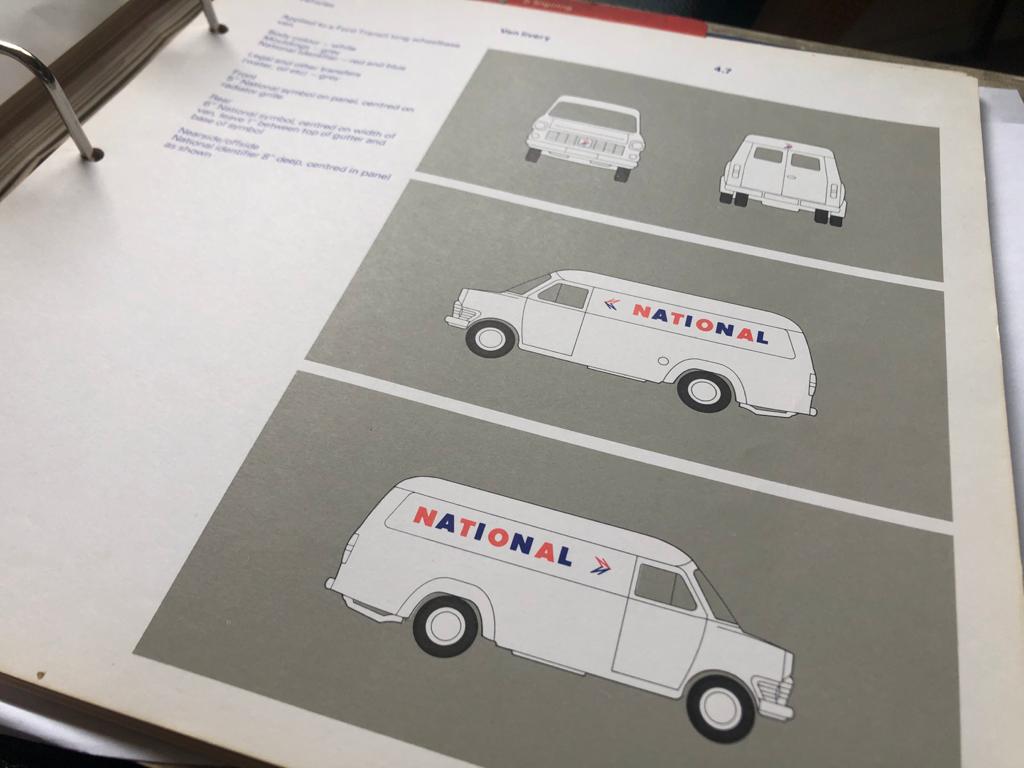
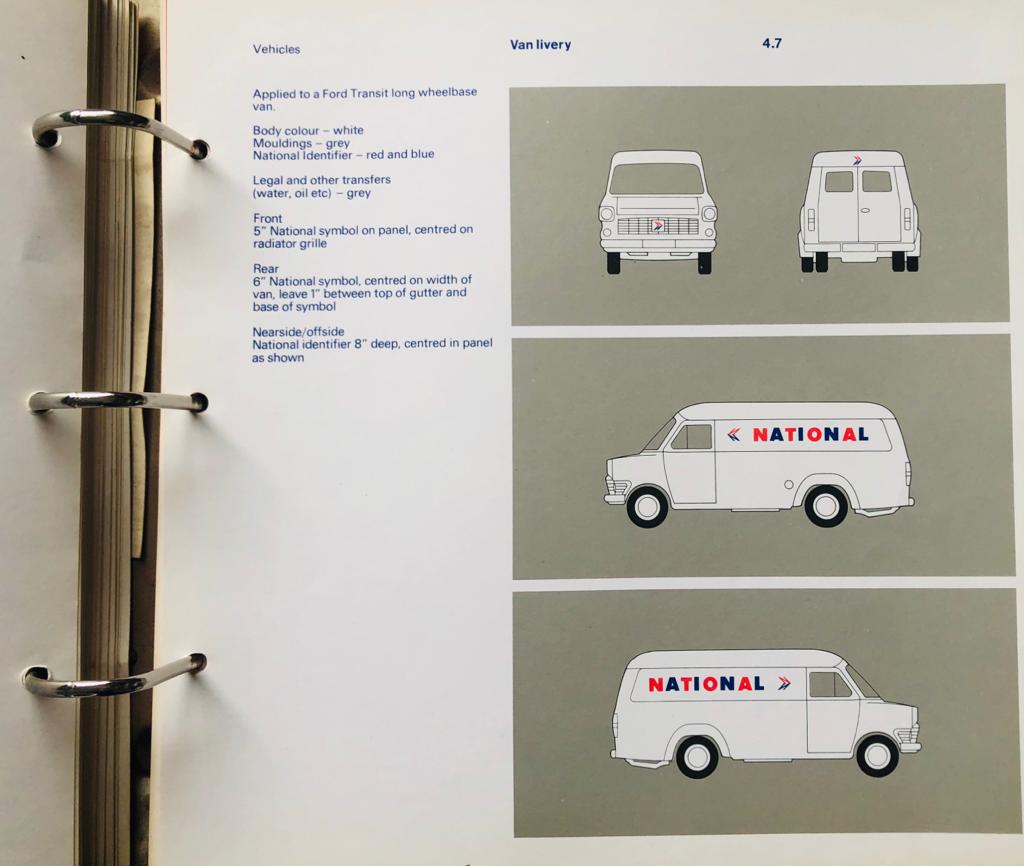
The 1975 NBC manual had only this to say on applying the corporate identity to service vehicles. Local company identities were not envisaged.

Reference to the appropriate page shows a medium size van as an example for the prescribed application. Unlike PSV vehicles where interpretation was relatively restricted, the Service Fleet was far more varied and the NBC allowed this one illustration to guide all other types of vehicle. This should have been straightforward as basically it was a variation on the Central Activities Group (CAG) coach livery, all-over white with red/blue NATIONAL lettering. Oddly, apart from the small legal lettering, there was no advice for the fleetname, which for CAG coaches initially had been a very small ‘company identifier’ underlined in the local company’s bus fleet colour, so if followed as per the manual, these vehicles would have been left anonymous across the NBC fleet.

Image 1 Trent A30 AEC Militant, as per corporate guidance, apart from the inclusion of Trent in red.

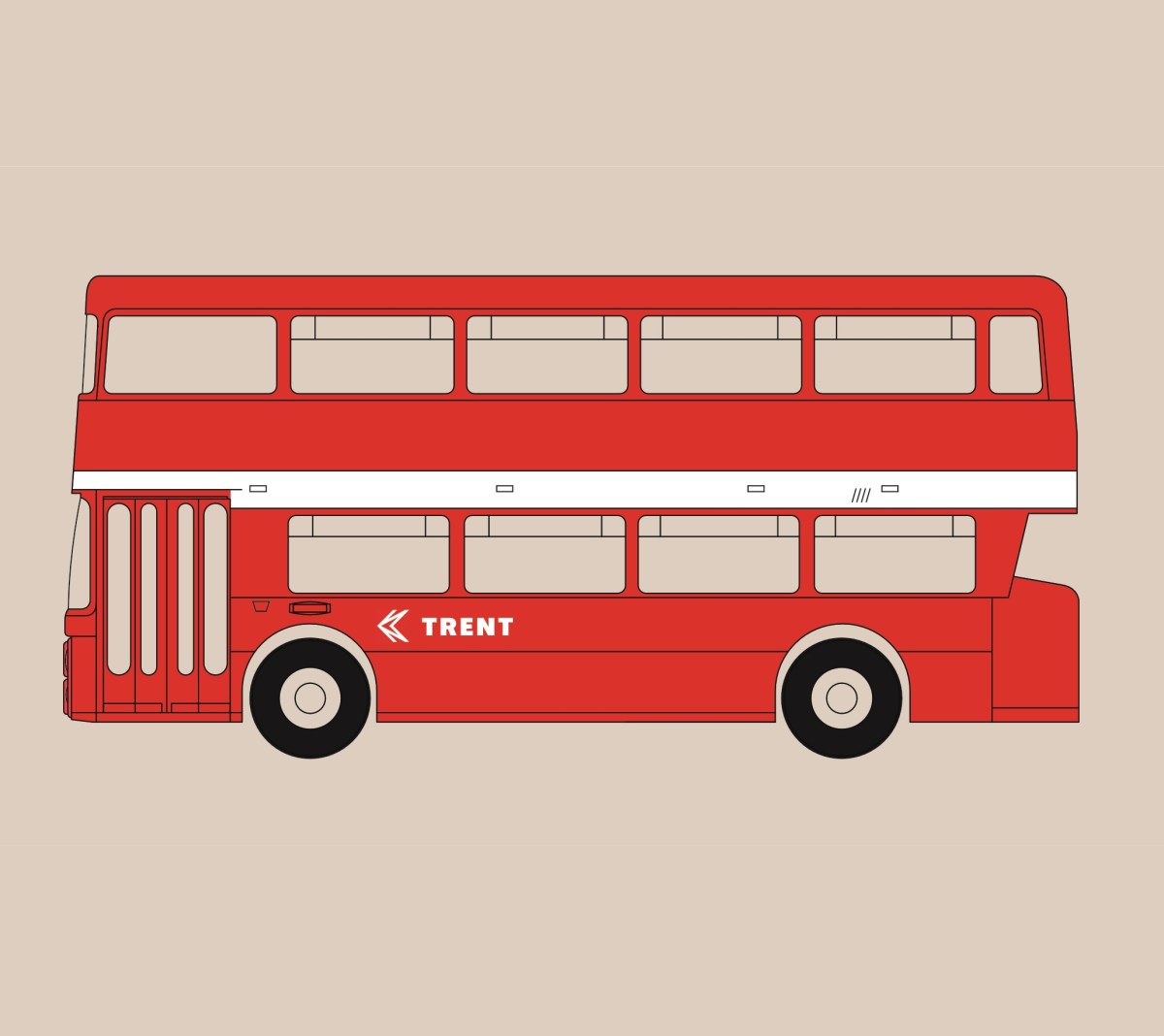
While that was the official guidance, in practice each fleet choose its own interpretation. A few did follow guidelines to a certain extent: Trent was a good example of compliance, with white applied to most of its ancillary fleet apart from its tree-lopper, which received all over yellow.

Image 2 Trent A55, again in the mid-1970s Trent followed the manual closely. A55 was a Bristol LD Driver training vehicle.

Ribble followed for its Trainers and some Breakdown lorries. East Kent and Alder Valley also had white vans, though Alder Valley replaced NATIONAL with its fleet name, as did Oxford South Midland.

The rest of the fleet contained a huge variety, rule of thumb was the use of the fleets base colour, ie Grass Green or Poppy Red, though I have no evidence of NBC Blue being used on Service Vehicles.

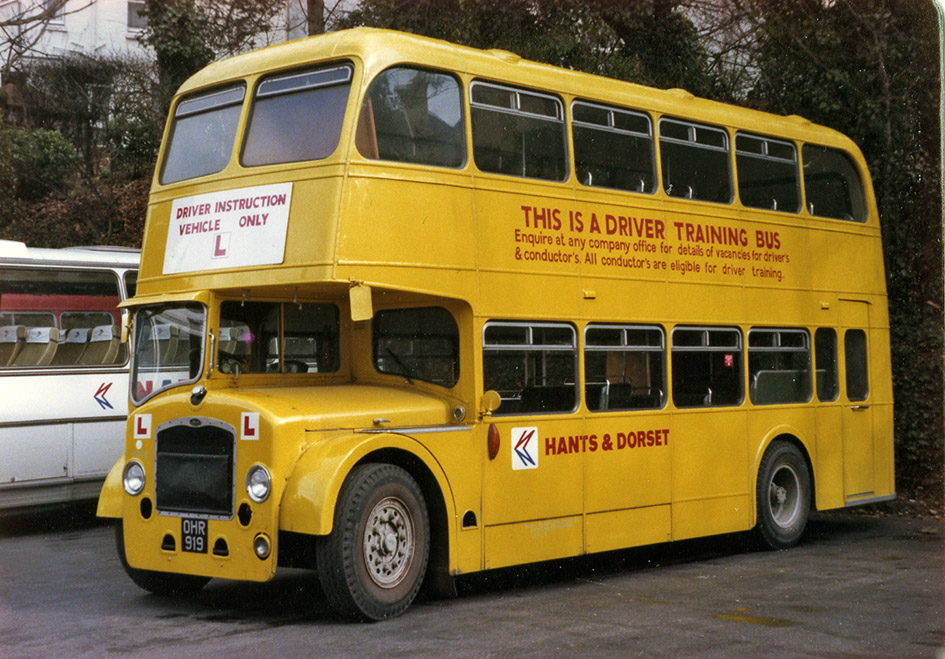
Image 3 Hants & Dorset 9092, apart from the corporate fleet name, Hants & Dorset applied carried this livery over in 1972, with a recruitment message along with the lettering stating the bus’s use.

Variation of this application depended on the company, Crosville choose unrelieved Green on its vans and lorries and a dual-purpose livery for its recovery vehicles including it impressive AEC Matador Heavy Recovery Vehicle. National Welsh treated its vans in dual-purpose red/white but used yellow for its Recovery and training vehicles. South Wales often used red or yellow but with no fleet name. With these vehicles, variation was the running theme across the corporate NBC! The livery of Training vehicles depended on the fleet, Western National, Maidstone, Hants & Dorset, Eastern Counties use all over yellow, with variations on lettering; Eastern National and latterly Bristol, had used all over dark blue, Crosville applied a broad white band between the decks, as did Lincolnshire.

Image 4 Bristol W160, after years of using cream with an orange band, Bristol adopted the same livery for trainers as Eastern National.
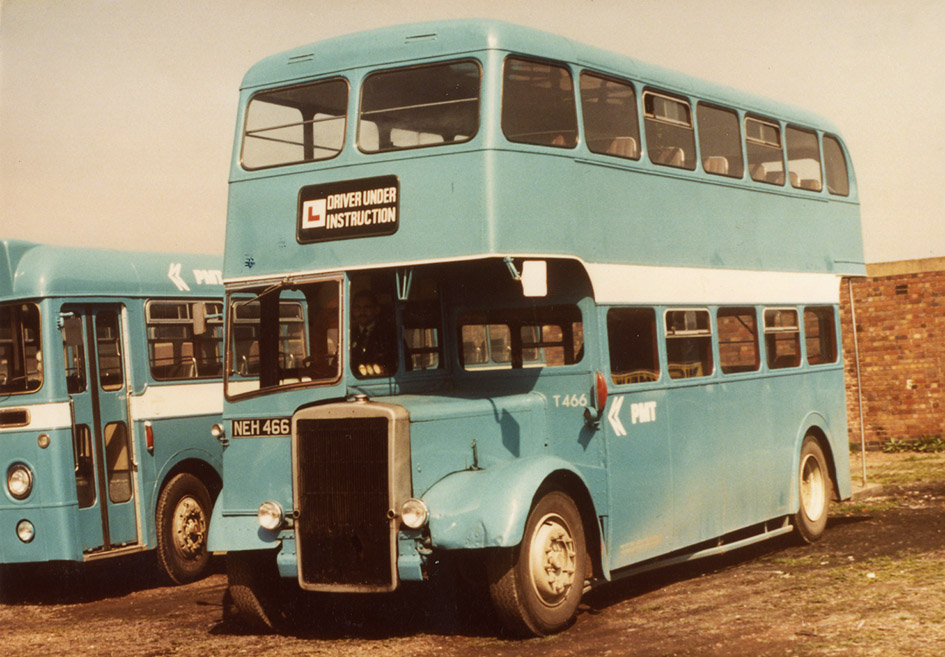
Image 5 PMT T466. Potteries trainer T466 display the unique non-standard blue in use in the mid-1970s, letter it used yellow.

Occasionally this lack of strict abidance would see the discreet way of continuing pre-corporate practices, initially Bristol applied Orange/Cream to much of its SV fleet, Southern Vectis applied underlined gold serif fleet names on its dual-purpose liveried van for a time and West Yorkshire perpetuated its use of non-standard green to the majority of it service fleet (apart from Trainers) throughout the 1970s!          

Image 6 East Midlands T2. For its small fleet of trainers East Midland was another company to adopt a unique non-standard livery, this time a shade of dark red
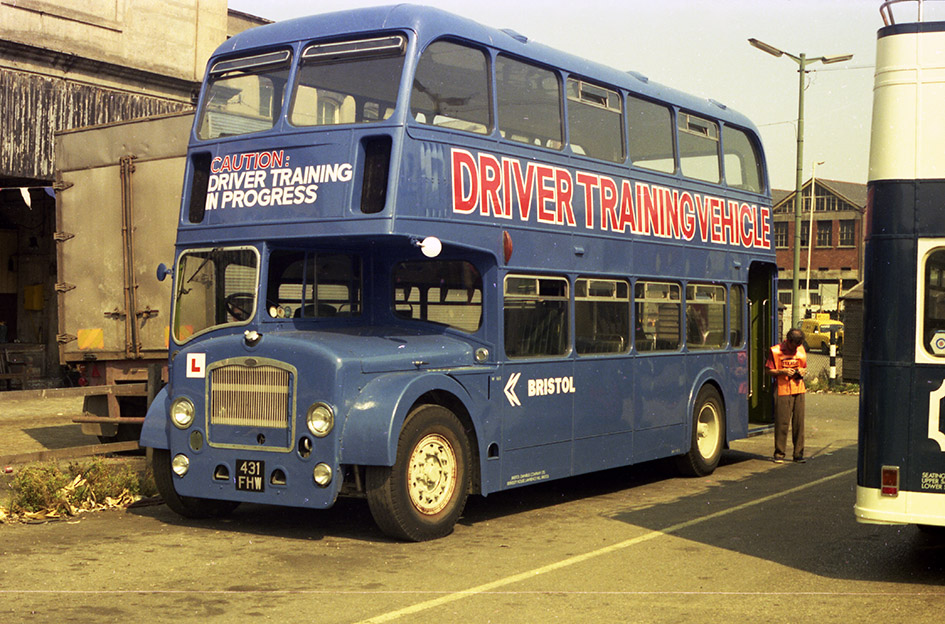
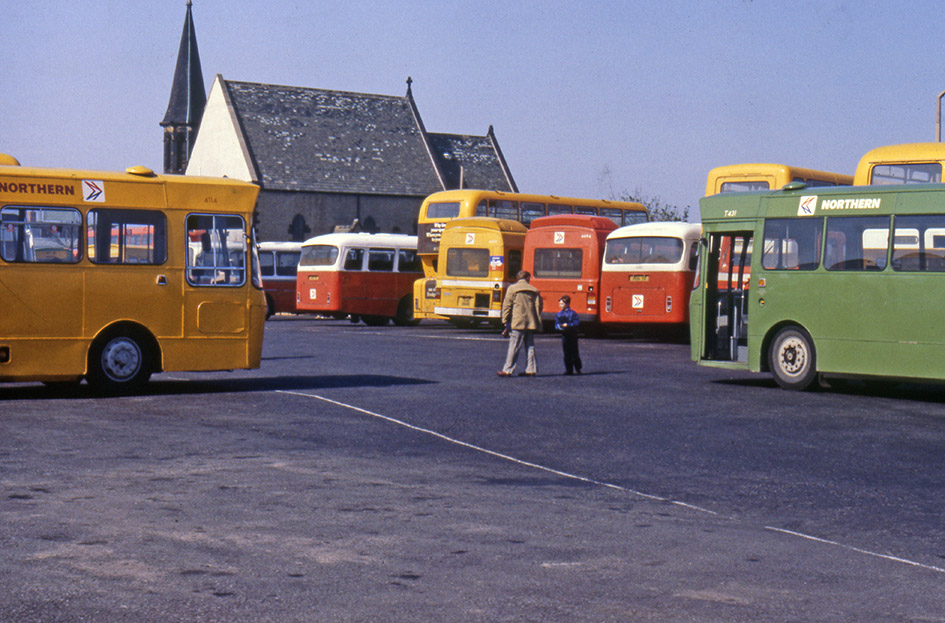
Image 7 Northern T431. Northern General was unique with the NBC in using yellow for its service buses, where they were in cooperation with Tyne & Wear PTE, therefore it changed to green for it Training vehicles, to avoid confusion with its buses. This photo illustrates the reasoning for this colour!

It would not be possible to list the huge variety of interpretation that companies used, many changing within the corporate period! As time progressed particularly into the 1980s livery guidance changed as well, yellow became the standard livery for Heavy Recovery lorries, possibly because of legislation, vans could be seen carrying adverts to promote commercial activities, and vans could be seen in standard factory colours, possibly a cost saving measure, or just white as they where meant to be from the start!        

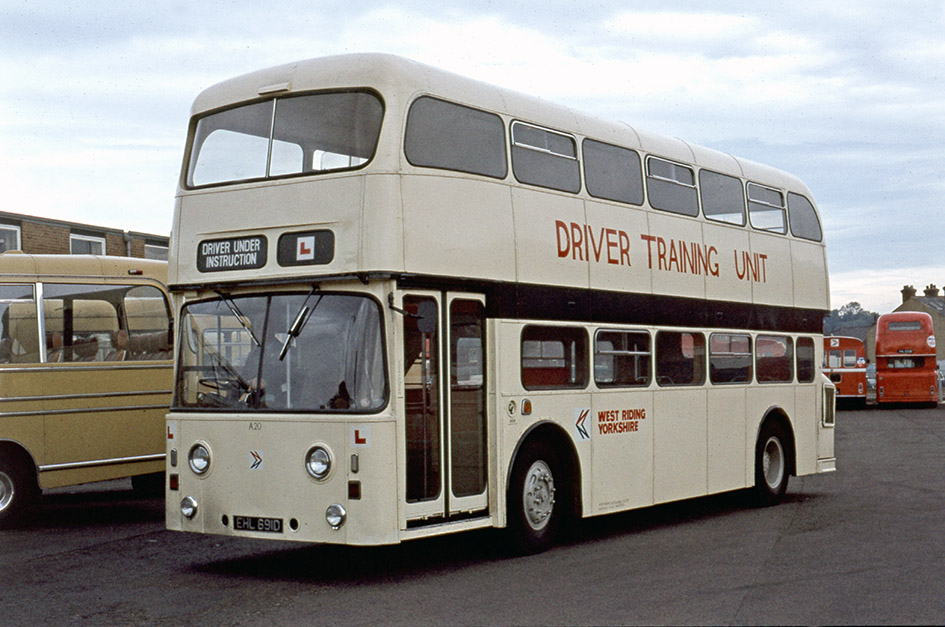
Image 8 West Riding A20. West Riding applied cream and black to its trainers, along with some bespoke signwriting which would have attracted the disapproval of NBC’s central projects team. Yorkshire Traction did also use similar livery for some of its training fleet.
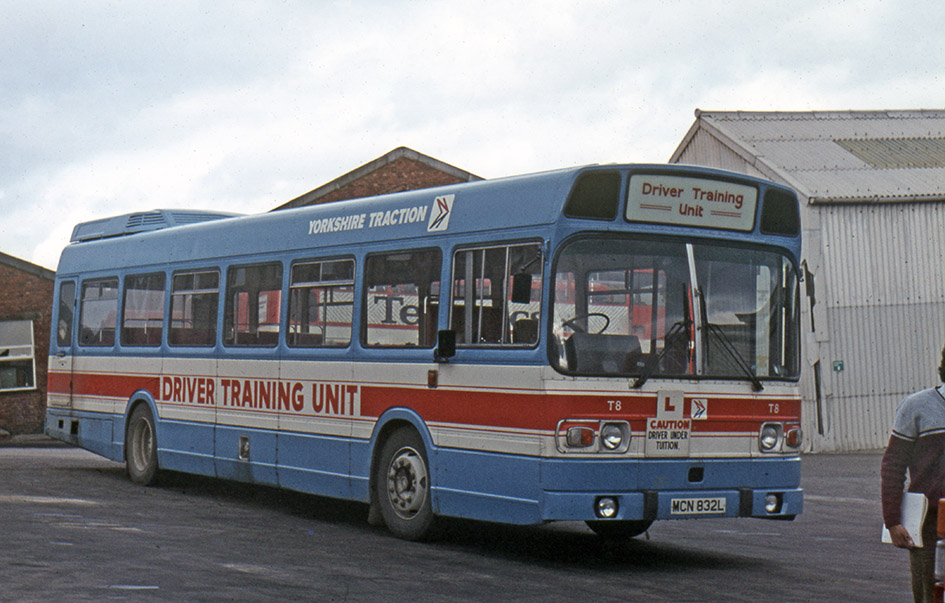
Image 9 Yorkshire Traction T8, in the mid-1970s YTC changed to this distinct Red, White and Blue livery for its driver trainers, latterly this livery could be found on some West Riding/Yorkshire trainers.
Image 10 National Welsh E8. The Western Welsh group favoured all over yellow for its recovery and training fleet from 1972 onwards, Bristol MW E8 is typical of its application.
Image 11 Bristol W144. Bristol had used Orange/Cream prior to 1972 and perpetuated this into the corporate era for a number of service vehicles, though this Bristol MW conversion has white in place of the cream.
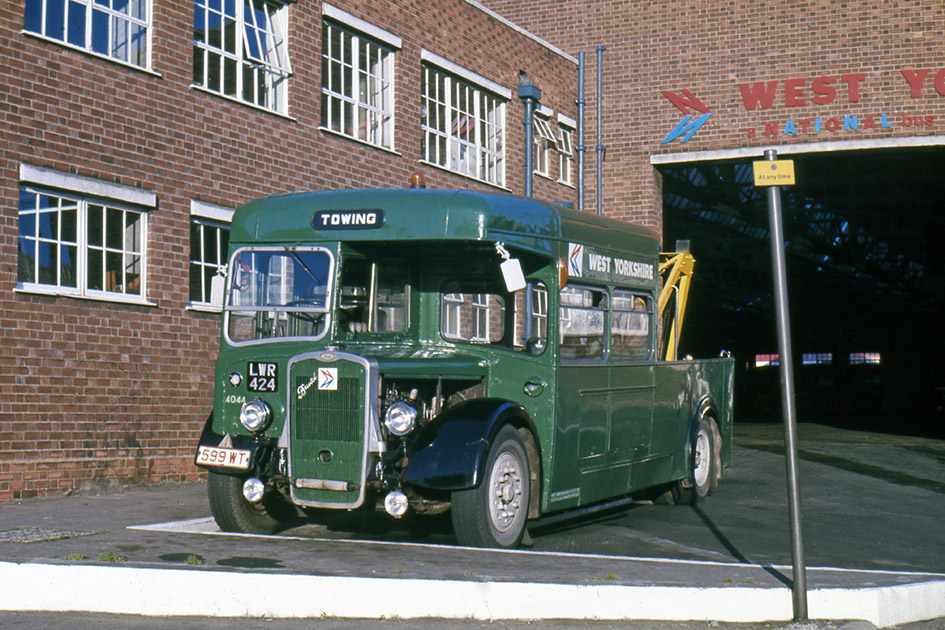
Image 12 West Yorkshire 4044. West Yorkshire a Poppy Red company continued using green for the majority of its service fleet throughout the 1970s. Bradford’s’ attractive recovery vehicle 4044 survives in preservation in this livery. 

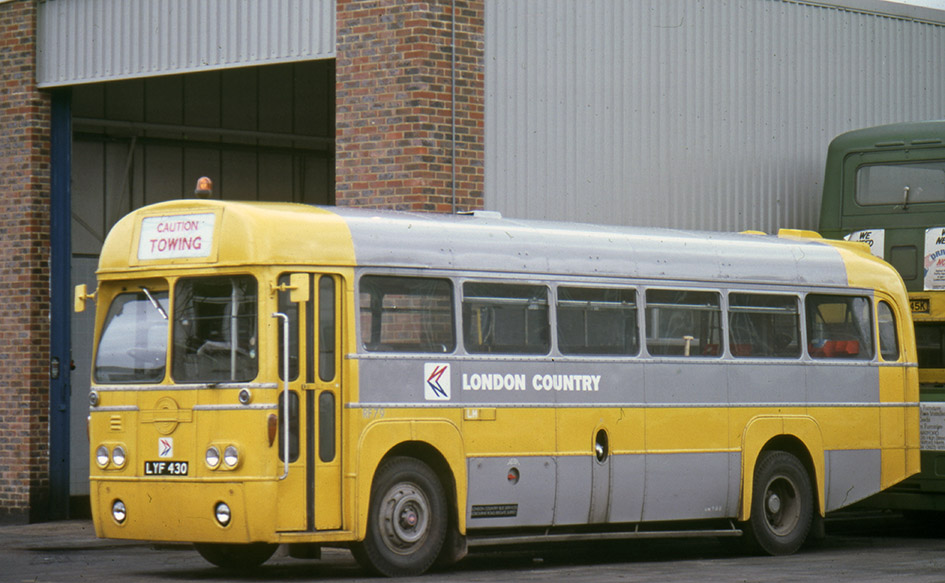
Image 13 London Country RF79. LCBS converted three AEC RFs into Towing vehicles, all receiving variations on the yellow and grey livery. LCBS was formerly part of London Transport, which used grey for many service vehicles.
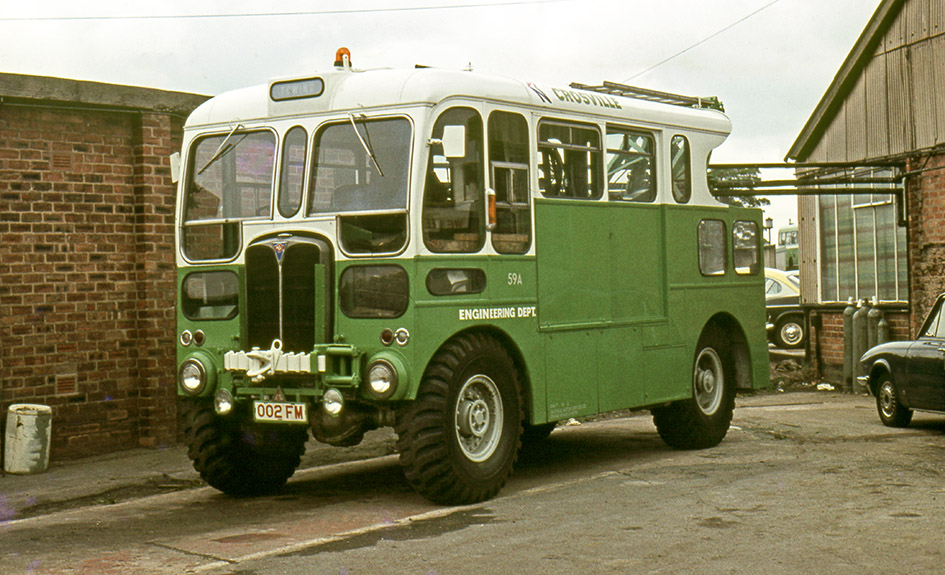
Image 14 Crosville 59A. After 1972 Crosville used only NBC green (some with white) for all its service vehicle, only in the 1980s did other colours appear, AEC Matador 59A, seen here, eventually received all over yellow.
Image 15. Western National RV8.  Western National group, including Devon General, used all-over yellow from 1972 for all its heavy recovery lorries, AEC Matador RV8, looks superb with its company-built bodywork.
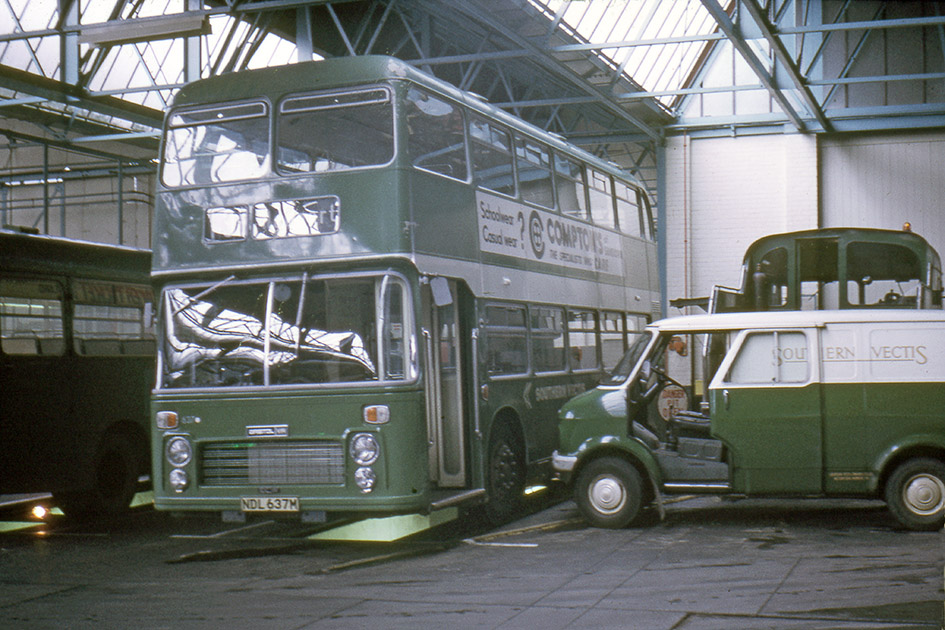
Image 16. Southern Vectis 011. Southern Vectis Bedford CF van number 011 clearly show the use of pre-corporate lettering applied to the fleet’s vans in the 1970s.
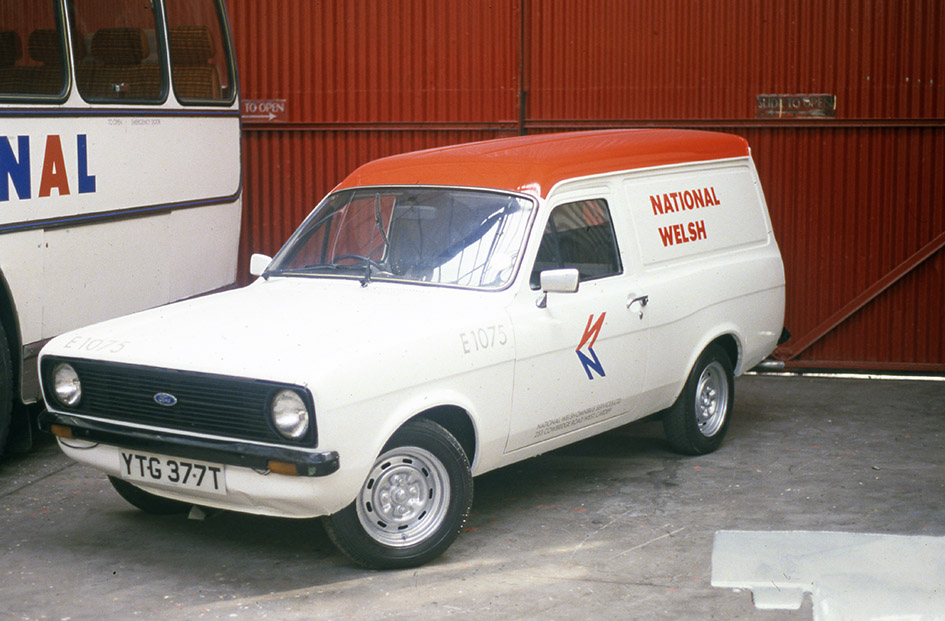
Image 17. National Welsh E1075. Yet more variety, Ford Escort Mk2 van carries white with a red roof. Later the company painted its small vans in a version of dual-purpose livery.
Image 18. Crosville G759. For other duties companies adopted bespoke liveries, Crosville’s Information bus G759 a Seddon Pennine, gained and orange and red stripe to the NBC green, other companies ‘MAP’ buses received a range of bespoke liveries. 
National Bus Company Service Vehicles 1972-1986 by [Michael Hitchen]

Many thanks to Michael Hitchen for providing this guest blog, including the photographs from his own collection. Michael is an authority on NBC’s liveries, and his book on NBC’s service vehicles is available from Amberley Books here: National Bus Company Service Vehicles 1972-1986 – Amberley Publishing ; and also from Amazon in hard copy or Kindle format.